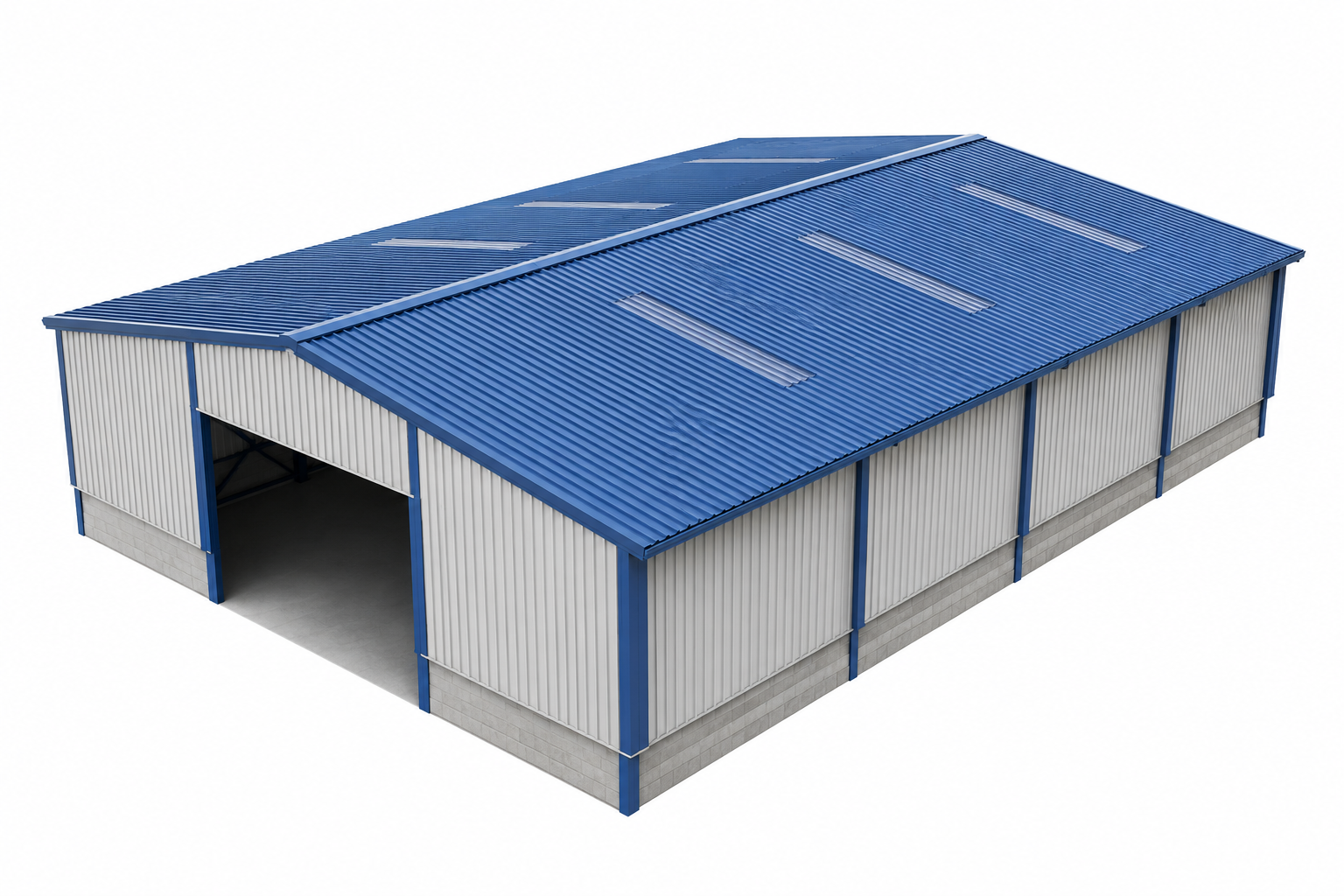

Petrol station canopy Kenya guide: specify roofing sheets, fascia, drainage, wind-resistant fixings and translucent panels for commercial forecourts.
Petrol station canopy roofing in Kenya requires careful specification of roofing sheets, structural spans, fascia detailing, drainage, lighting and translucent panels. Commercial carport roofing also needs to balance weather protection, appearance, durability and practical installation requirements.
Forecourt canopies and commercial carports are different from conventional building roofs. They are often highly visible, exposed to wind and supported by relatively large structural spans. The roof must therefore be coordinated with the supporting steelwork and the operational requirements of the site.
What Is Petrol Station Canopy Roofing?
Petrol station canopy roofing is the roofing system installed over a fuel-station forecourt to protect customers, vehicles and equipment from sun and rain.
Shop Tent Accessories
View all Tent Accessories
A typical canopy may include:
- Steel columns
- Primary beams
- Secondary steelwork
- Purlins
- Roofing sheets
- Fascia
- Gutters
- Drainage
- Lighting
- Signage
- Translucent roof panels
Because the canopy is an important part of the station's visual identity, appearance also matters.
Why Canopy Roofing Requires Special Planning
A petrol station canopy combines structural, architectural and operational requirements in one roof system.
The design needs to consider:
- Wide spans
- Wind loading
- Roof drainage
- Roofing profile
- Sheet length
- Fascia height
- Lighting
- Signage
- Maintenance access
- Corrosion exposure
A roofing sheet should not be selected independently of the canopy structure.
Commercial Carport Roofing
Commercial carport roofing protects vehicles while creating a practical covered parking area for businesses, residential developments and public facilities.
Commercial carports may be used at:
- Shopping centres
- Offices
- Hotels
- Apartments
- Schools
- Hospitals
- Industrial facilities
- Retail premises
The roof can be designed as a standalone structure or integrated with an existing building.
Roofing Sheets for Commercial Canopies
Commercial canopy sheets should be selected according to span, profile, thickness, coating, roof pitch and the structural support arrangement.
Common options may include:
- Box profile sheets
- IT5 profiles
- Corrugated roofing
- Other approved metal roofing profiles
The correct product depends on the project's engineering and architectural requirements.
Long-Span Canopy Roofing
Long-span roofing can help create open forecourt spaces with fewer visible structural supports, but the sheet and supporting frame must be designed for the required span.
A long-span canopy may offer:
- Fewer intermediate supports
- Open vehicle circulation
- Cleaner appearance
- Reduced sheet joints
- Efficient construction
However, increasing the span also affects structural requirements.
Canopy Purlin Spacing
Purlin spacing should be coordinated with the roofing profile and sheet thickness rather than selected from a generic spacing rule.
Important factors include:
- Sheet profile
- Sheet thickness
- Span
- Wind loading
- Purlin size
- Fixing pattern
- Manufacturer recommendations
Incorrect spacing can contribute to excessive deflection or sheet damage.
Fascia Detailing on Petrol Station Canopies
Fascia detailing gives a canopy its finished appearance while helping conceal structural components and roofing edges.
A well-designed fascia can provide space for:
- Branding
- Signage
- Lighting
- Guttering
- Structural concealment
The fascia should be properly connected to the canopy structure and detailed to prevent water ingress.
Why Fascia Height Matters
The fascia should be coordinated with the roofing profile, drainage system, signage and overall canopy proportions.
An excessively deep fascia can add unnecessary weight and cost.
A poorly detailed fascia can create:
- Water traps
- Corrosion points
- Loose panels
- Visible fixings
- Difficult maintenance
The architectural and roofing details should therefore be coordinated.
Translucent Roofing Panels
Translucent roofing panels can introduce natural daylight into a canopy or carport, reducing the need for artificial lighting during daylight hours.
They may be useful for:
- Petrol station canopies
- Covered parking
- Warehouses
- Workshops
- Commercial walkways
The panels should be compatible with the surrounding roofing system.
How Much Translucent Roofing Should You Use?
The amount and positioning of translucent panels should be based on the required daylight level rather than simply maximising transparent roof area.
Too much translucent material can contribute to:
- Glare
- Heat gain
- Uneven lighting
- Faster material ageing
The roof design should balance daylight with thermal comfort and durability.
Canopy Roof Drainage
Canopy drainage must be carefully planned because a large roof can collect significant quantities of rainwater.
Options may include:
- Gutters
- Downpipes
- Internal drainage
- External drainage
- Concealed outlets
The drainage arrangement should direct water away from:
- Vehicle areas
- Pedestrian paths
- Fuel equipment
- Building entrances
Water should not be allowed to discharge unpredictably onto the forecourt.
Concealed Gutters
Concealed gutters can produce a clean appearance but require careful detailing and maintenance access.
The design should consider:
- Gutter capacity
- Waterproofing
- Overflow
- Access for cleaning
- Expansion
- Connection to downpipes
A concealed gutter that cannot be inspected or cleaned easily can become a maintenance problem.
Wind Uplift on Canopies
Petrol station canopies and commercial carports must be designed for relevant wind forces because their large, exposed roof surfaces can experience significant uplift.
Wind forces affect:
- Roofing sheets
- Screws
- Purlins
- Main beams
- Columns
- Connections
- Fascia panels
The structural engineer should establish the appropriate design loads.
Canopy Roofing Fixings
Roofing screws and fixing patterns should be selected according to the roofing manufacturer's requirements and the structural design.
Consider:
- Screw type
- Washer quality
- Corrosion resistance
- Fixing spacing
- Edge zones
- Purlin thickness
Over-tightening screws can damage washers and roofing sheets.
Under-tightening can compromise the fixing.
Corrosion Resistance at Petrol Stations
Canopy roofing should have an appropriate corrosion-resistant coating because the roof is exposed to weather, moisture and potentially aggressive site conditions.
The coating selection should account for:
- Local climate
- Coastal exposure
- Industrial environment
- Air pollution
- Cleaning chemicals
- Expected service life
Fasteners and accessories should also be compatible with the roofing material.
Petrol Station Canopy Safety
A petrol station canopy should be designed and installed in accordance with applicable building, electrical, fire and petroleum-sector requirements.
Roofing work should be coordinated with:
- Lighting
- Electrical systems
- Signage
- Fuel equipment
- Drainage
- Fire-safety requirements
Specialist professionals should determine requirements applicable to the specific fuel station.
Lighting Under a Canopy
Canopy lighting should be incorporated into the roof and fascia design rather than treated as an afterthought.
Plan locations for:
- LED fixtures
- Electrical conduits
- Maintenance access
- Signage lighting
- Emergency lighting where required
Roof penetrations should be properly detailed to prevent leaks.
Solar Panels on Commercial Carports
Commercial carports can potentially provide useful surfaces for solar PV, but the supporting structure must be designed for the additional loads and wind forces.
Before adding solar panels, consider:
- Structural capacity
- Panel weight
- Mounting system
- Wind uplift
- Cable routing
- Maintenance access
- Drainage
A carport intended for future solar should ideally be designed for it from the beginning.
Roofing Profile and Appearance
The roofing profile affects both technical performance and the appearance of a commercial canopy.
Consider:
- Profile depth
- Cover width
- Rib orientation
- Sheet length
- Colour
- Fascia integration
For branded commercial properties, the roof should complement the overall architectural design.
Colour and Coating Selection
Colour and coating should be selected for both appearance and environmental performance.
A commercial canopy may need to maintain its appearance despite:
- Strong sunlight
- Dust
- Rain
- Pollution
- Frequent cleaning
The paint and coating specification should therefore be checked rather than choosing colour alone.
Commercial Carport Roof Pitch
Carport roof pitch affects rainwater drainage, appearance, sheet selection and overall structural design.
The selected pitch should be compatible with:
- Roofing profile
- Sheet length
- Drainage system
- Structural design
- Site constraints
Low-pitched roofs require particularly careful attention to water drainage.
Sheet Length for Canopies
Long roofing sheets can reduce the number of joints and improve installation efficiency when their length is practical to transport and handle.
Before ordering, confirm:
- Roof slope length
- Required overhang
- Fascia position
- Ridge detail
- Sheet cover width
- Transport limitations
Avoid ordering sheets based solely on the plan dimensions without checking the actual roof geometry.
Maintenance of Commercial Canopy Roofing
Regular inspection helps identify loose fasteners, blocked gutters, corrosion and damaged sheets before they become larger problems.
Inspect:
- Roofing sheets
- Screws
- Fascia
- Gutters
- Downpipes
- Translucent panels
- Flashings
- Structural connections
Cleaning should be carried out using methods compatible with the roofing coating.
Common Canopy Roofing Mistakes
Poor coordination between roofing, structural and architectural elements can create avoidable problems in commercial canopy projects.
Choosing Roofing Sheets Before Structural Design
The sheet profile should work with the supporting structure.
Ignoring Wind Loads
Open canopies can be highly exposed to wind.
Poor Fascia Detailing
Water can enter through poorly designed joints.
Undersized Drainage
Large canopy roofs can generate substantial runoff.
Excessive Translucent Panels
Too much transparent roofing can increase heat and glare.
Poor Fixing
Incorrect screw spacing or installation can compromise the roof.
Forgetting Maintenance Access
Gutters, lighting and roof components eventually need inspection.
Commercial Canopy Roofing Checklist
Use this checklist before ordering roofing materials for a petrol station canopy or commercial carport.
- Structural span confirmed
- Wind loads considered
- Roofing profile selected
- Sheet thickness specified
- Purlin spacing confirmed
- Sheet lengths established
- Fixing system specified
- Fascia design completed
- Gutter capacity calculated
- Downpipes positioned
- Translucent panels planned
- Lighting coordinated
- Signage coordinated
- Corrosion environment assessed
- Maintenance access provided
- Applicable regulations reviewed
Final Thoughts
Petrol station canopy roofing in Kenya should be specified as a complete system rather than simply selecting sheets to cover the structure. Wide spans, wind uplift, fascia detailing, drainage, translucent panels, lighting, corrosion resistance and maintenance all need to be considered.
For commercial carports, the same principle applies.
The best specification coordinates:
Structure + roofing sheets + fixings + fascia + drainage + daylight + lighting + maintenance
Getting these details right before ordering materials can reduce installation problems, improve the finished appearance and increase the long-term performance of the canopy.
Contact Us
If you are planning petrol station canopy roofing in Kenya or commercial carport roofing, our team can help you compare suitable roofing profiles, sheet specifications and accessories for your project.
Visit Us:
Funzi Road Branch, End of Funzi Road, Industrial Area
Ali Glaziers LTD Building
Nairobi, Kenya
Call / WhatsApp:
+254 (0) 716 259 682
+254 (0) 722 522 452
Email:
Shop Online:
Learn More:
Request a Quote: