Roof insulation Kenya explained: learn how insulation, ventilation and anti-condensation roofing work together to prevent moisture under metal roofs.
Roof insulation in Kenya helps regulate indoor temperatures, while adequate ventilation helps control condensation that can form beneath metal roofing. When warm, moisture-laden air meets a cold roof surface, water can condense underneath the mabati and drip into the building.
For homes, shops, warehouses and other Kenyan buildings, controlling condensation requires more than simply adding insulation. The roof assembly needs appropriate ventilation, moisture control and correctly installed materials.
What Causes Condensation Under Mabati?
Condensation under mabati occurs when humid indoor air reaches a roof surface that is cold enough for moisture to turn into water droplets.
Shop Tent Accessories
View all Tent Accessories
The process is similar to what happens when water forms on the outside of a cold glass.
Inside a building, moisture can come from:
- Cooking
- Bathing
- Laundry
- Human respiration
- Wet floors
- Stored materials
- Industrial processes
- Poor ventilation
When this warm air rises toward a metal roof, it can meet a cooler sheet and condense.
This is why condensation under mabati can occur even when the roof itself is not leaking.
Is Condensation the Same as a Roof Leak?
No. Condensation and roof leaks have different causes, although both can result in water appearing inside a building.
A roof leak usually occurs because rainwater enters through:
- Damaged sheets
- Incorrect laps
- Loose fasteners
- Failed flashings
- Ridge gaps
- Valleys
- Penetrations
Condensation occurs when moisture from the building's air becomes liquid on a cold surface.
The distinction matters because replacing roofing sheets will not necessarily solve an internal condensation problem.
Roof Insulation in Kenya
Roof insulation in Kenya can reduce heat transfer between the roof and interior, improving thermal comfort while also helping control the temperature difference that contributes to condensation.
Common insulation materials include:
- Glass wool
- Rock wool
- Polyester insulation
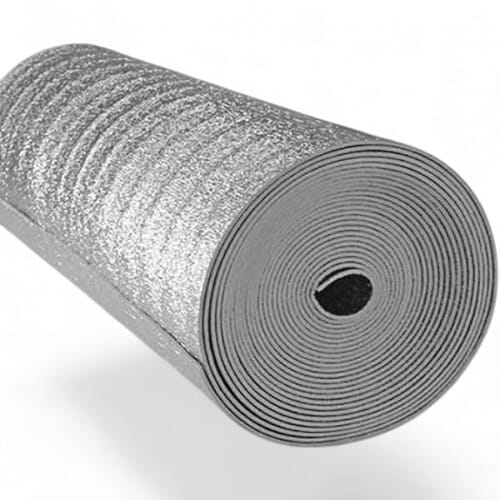
- Foil-faced insulation
- Rigid insulation boards
- Other purpose-designed roof insulation products
The correct material depends on the roof construction and performance requirements.
Insulation should be installed as part of a complete roof assembly rather than simply placed wherever there is available space.
How Does Roof Insulation Help?
Insulation slows the movement of heat through the roof, helping keep interior spaces cooler during hot periods and warmer when external temperatures fall.
It can also improve:
- Thermal comfort
- Energy efficiency
- Acoustic performance
- Indoor temperature stability
However, insulation alone does not guarantee that condensation will disappear.
Moisture control and ventilation still matter.
Why Ventilation Matters
Roof ventilation allows moisture-laden air to escape instead of remaining trapped beneath the roofing system.
Depending on the roof design, ventilation can involve:
- Eaves ventilation
- Ridge ventilation
- Vents
- Ventilated cavities
- Purpose-designed roof openings
Air should be able to enter and leave the appropriate roof space.
Simply creating random openings is not the same as designing effective ventilation.
Insulation and Ventilation Work Together
The best condensation-control strategy combines insulation with appropriate ventilation and moisture management rather than relying on one product.
A simplified roof assembly may include:
External roofing → ventilation/drainage layer → insulation → internal ceiling
The exact arrangement depends on the building and roofing system.
The goal is to control both heat movement and moisture movement.
What Is Anti-Condensation Roofing?
Anti-condensation roofing refers to roofing systems or treatments designed to reduce the formation or dripping of condensation beneath metal sheets.
Some systems use a specialised backing or fleece layer attached to the underside of the roofing sheet.
This layer can:
- Absorb condensation temporarily
- Reduce dripping
- Allow moisture to dry under suitable conditions
However, the system still requires appropriate ventilation.
Anti-condensation treatment should not be viewed as a replacement for fixing the underlying moisture problem.
When Is Anti-Condensation Roofing Useful?
Anti-condensation roofing can be particularly useful in buildings where humidity levels are high and the underside of metal roofing is vulnerable to condensation.
Potential applications include:
- Warehouses
- Workshops
- Garages
- Agricultural buildings
- Storage facilities
- Industrial buildings
- Some residential structures
The suitability depends on the building's use and environmental conditions.
Condensation in Warehouses
Warehouses can experience significant condensation because large internal spaces may contain moisture while metal roofs cool rapidly, especially at night.
The problem can become worse when warehouses store:
- Produce
- Chemicals
- Wet materials
- Water-based products
- Agricultural goods
Warehouse design should therefore consider ventilation and moisture sources from the beginning.
Condensation in Industrial Buildings
Industrial processes can introduce substantial moisture into the air, increasing the potential for condensation beneath metal roofing.
Activities such as washing, processing or heating can increase indoor humidity.
In these environments, the solution may require more than roof insulation.
Consider:
- Mechanical ventilation
- Extraction
- Roof ventilation
- Insulation
- Vapour control
- Process moisture management
The moisture source should be identified before selecting a roofing solution.
Condensation in Homes
Residential condensation can occur when indoor humidity is high and warm air reaches colder roof components.
Common contributors include:
- Poor bathroom ventilation
- Cooking without extraction
- Drying clothes indoors
- Poorly ventilated bedrooms
- Cold roof spaces
- Inadequate insulation
Improving ventilation at the moisture source can sometimes make a significant difference.
Signs of Condensation Under a Metal Roof
Condensation often produces patterns that differ from conventional roof leaks.
Look for:
- Water droplets on the underside of sheets
- Moisture appearing during cold mornings
- Dampness without rainfall
- Widespread droplets across sheets
- Mould on ceiling materials
- Damp insulation
- Water appearing beneath apparently intact roofing
If water appears even when there has been no rain, condensation should be investigated.
Does Condensation Happen More at Night?
Condensation can become more noticeable at night and in the early morning because roofing surfaces can cool significantly as external temperatures fall.
A metal roof can lose heat quickly.
If the underside becomes cooler than the surrounding moist air's dew point, condensation can form.
This is why a building may appear dry during the afternoon but have moisture beneath the roof the following morning.
Roof Insulation and Heat in Kenya
Roof insulation is also valuable in Kenya because metal roofing can become very hot under direct sunlight.
Without adequate insulation, solar heat can pass through the roof assembly and increase indoor temperatures.
Good roof design can help reduce heat transfer through:
- Insulation
- Ventilation
- Reflective surfaces
- Appropriate roofing profiles
- Ceiling systems
- Shading
The most suitable combination depends on the building.
Does a Thicker Roofing Sheet Prevent Condensation?
A thicker roofing sheet does not automatically eliminate condensation because condensation is primarily related to surface temperature, humidity and moisture movement.
Changing from one sheet gauge to another may alter thermal behaviour slightly, but it does not solve excessive indoor humidity.
If condensation is severe, investigate the complete roof assembly.
Does Insulation Stop Condensation Completely?
Insulation can reduce condensation risk but cannot guarantee that condensation will never occur.
Problems can remain when:
- Humidity is very high
- Ventilation is inadequate
- Vapour control is poor
- Thermal bridges exist
- Insulation is incorrectly installed
- Moisture enters the roof cavity
Good installation is therefore as important as choosing the insulation material.
Vapour Control and Roof Moisture
Vapour control helps limit the movement of moisture-laden air into parts of the roof assembly where it could condense.
The appropriate vapour-control arrangement depends on:
- Climate
- Building use
- Roof construction
- Indoor humidity
- Insulation location
For specialised buildings, the roof should be designed by an appropriate professional rather than relying on a generic installation method.
Avoid Compressing Insulation
Insulation should be installed according to its specified thickness because excessive compression can reduce its intended thermal performance.
Avoid:
- Crushing insulation beneath roofing components
- Leaving large gaps
- Creating unnecessary compression
- Installing damaged material
The manufacturer's installation instructions should be followed.
Gaps in Roof Insulation
Poorly fitted insulation can create thermal weak points where heat moves more easily through the roof.
Common problems include:
- Gaps between pieces
- Missing insulation around edges
- Poorly fitted sections
- Unsealed penetrations
- Compressed material
Careful installation produces more consistent performance.
Roof Ventilation for Mabati
Ventilation beneath mabati should be planned so that moisture can escape without creating a pathway for rainwater to enter the building.
Ventilation details should be compatible with:
- Roof pitch
- Ridge design
- Eave design
- Roof profile
- Flashings
- Insect protection
The aim is controlled airflow, not uncontrolled openings.
Can You Add Insulation to an Existing Roof?
Yes, insulation can often be added during renovation, but the existing roof assembly should be assessed before installation.
Check for:
- Existing leaks
- Rust
- Damaged sheets
- Wet insulation
- Structural deterioration
- Poor ventilation
- Moisture sources
Installing new insulation over a persistent moisture problem can hide the issue rather than solve it.
Condensation and Roof Timber
Persistent condensation can create a damp environment that contributes to deterioration of roof timber and other building components.
Moisture can contribute to:
- Mould
- Timber decay
- Corrosion
- Damaged ceilings
- Poor indoor air quality
Where timber is part of the roof structure, keeping the assembly appropriately dry is important for long-term performance.
Condensation and Roofing Screws
Repeated moisture around roofing fasteners can contribute to corrosion, particularly when unsuitable or poorly protected fasteners are used.
Check for:
- Rust around screws
- Damaged washers
- Loose fasteners
- Corrosion on the underside of sheets
Roofing materials and fasteners should be selected for the building's exposure conditions.
Coastal Kenya and Condensation
Buildings in humid coastal environments may need particularly careful moisture and ventilation planning because atmospheric humidity can be high.
In coastal locations, consider both:
- Condensation control
- Corrosion resistance
The roofing system should be appropriate for the local environment rather than selected solely on price.
Condensation in Kisumu and Other Humid Areas
Humid environments can increase the amount of moisture available for condensation, making ventilation and moisture control particularly important.
Buildings near large bodies of water or in humid climates may require careful consideration of:
- Indoor humidity
- Roof ventilation
- Insulation
- Roofing coatings
- Fastener corrosion
The exact roof solution should reflect the building's location and use.
How to Reduce Condensation Under Mabati
Reducing condensation under mabati requires controlling indoor moisture, improving roof ventilation and installing insulation correctly.
A practical approach is:
- Identify the moisture source.
- Check whether the water appears during rainfall.
- Inspect the underside of the roofing.
- Check roof ventilation.
- Inspect existing insulation.
- Improve ventilation where necessary.
- Consider anti-condensation roofing products.
- Repair leaks separately.
- Monitor the roof during different weather conditions.
Do not assume that every instance of water beneath a roof is a leak.
Common Roof Insulation Mistakes
Poor installation can reduce the effectiveness of insulation and create new moisture problems.
Common mistakes include:
Blocking Ventilation
Insulation should not unnecessarily obstruct designed airflow paths.
Installing Wet Insulation
Wet insulation can lose performance and create moisture problems.
Ignoring Indoor Humidity
The moisture source may be inside the building.
Covering Existing Leaks
Insulation should not be used to conceal roofing defects.
Poorly Sealing the Roof Assembly
Uncontrolled air and moisture movement can contribute to condensation.
Choosing Products Without Checking Compatibility
Roofing, insulation and ventilation components need to work together.
Roof Insulation Checklist
Use this checklist when planning insulation and condensation control for a Kenyan building.
- Roof condition inspected
- Moisture sources identified
- Roof leaks ruled out
- Appropriate insulation selected
- Correct insulation thickness specified
- Ventilation considered
- Vapour control considered
- Roof penetrations detailed
- Eaves and ridge ventilation checked
- Fasteners suitable for exposure
- Insulation installed without unnecessary gaps
- Maintenance access considered
Final Thoughts
Roof insulation in Kenya works best when it is designed together with ventilation and moisture control. Condensation under mabati is not necessarily a sign of a leaking roof, and simply changing roofing sheets may not solve the problem.
For a new building, plan the roof assembly before installation.
For an existing building, identify whether the moisture comes from rainfall, indoor humidity or condensation before deciding on a solution.
A well-designed roof should provide:
Thermal insulation + controlled ventilation + moisture management + durable roofing materials
This combination can improve comfort, protect the roof structure and reduce problems caused by persistent condensation.
Contact Us
If you are selecting roofing sheets or planning a roof insulation solution, our team can help you compare suitable roofing materials and accessories for your project.
Visit Us:
Funzi Road Branch, End of Funzi Road, Industrial Area
Ali Glaziers LTD Building
Nairobi, Kenya
Call / WhatsApp:
+254 (0) 716 259 682
+254 (0) 722 522 452
Email:
Shop Online:
Learn More:
Request a Quote: