
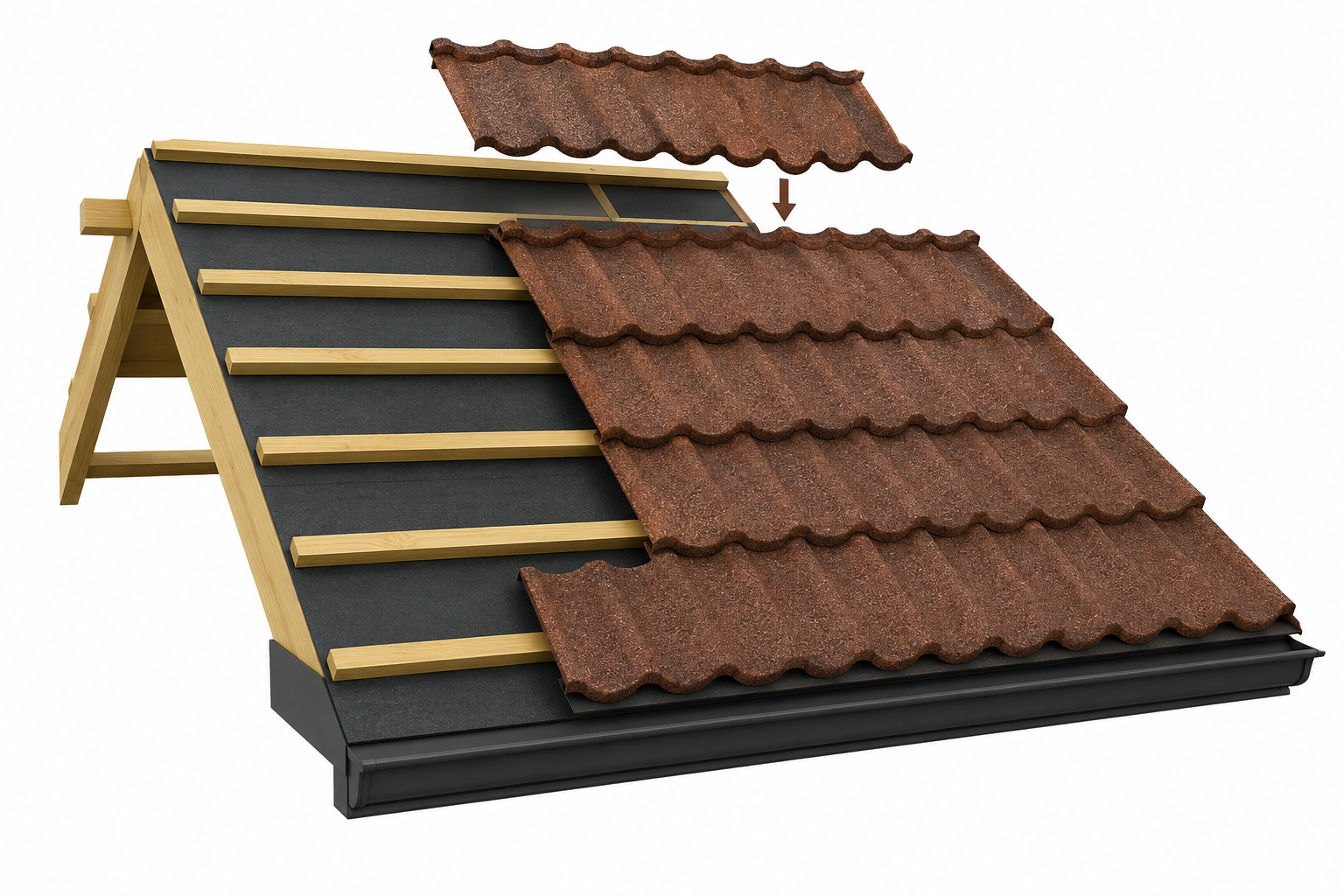
Planning a stone coated tile installation in Kenya? Learn the correct batten spacing, nailing techniques, course alignment, and installation best practices to achieve a durable, weather-resistant roof while protecting your manufacturer's warranty.
Stone Coated Tile Installation in Kenya: Batten Spacing and Nailing
Choosing premium stone coated roofing tiles is only the first step towards building a durable and attractive roof. Equally important is ensuring the tiles are installed correctly. Proper stone coated tile installation involves much more than laying tiles across a roof. Every stage, from preparing the roof structure to setting battens, fixing tiles, and finishing ridges, plays a vital role in the roof's performance and longevity.
In Kenya, roofs are exposed to heavy rainfall, intense sunshine, strong winds, and significant temperature fluctuations. These conditions make professional installation essential. Incorrect batten spacing, poor nailing techniques, or inadequate flashing can lead to leaks, loose tiles, and premature roof failure. Following manufacturer guidelines and industry best practices helps protect both the roof and the product warranty.
At Ali Glaziers Roofing Solutions, we supply and install high-quality stone coated roofing systems for residential homes, commercial buildings, schools, churches, and institutional projects across Kenya. Learn more about our experience by visiting our Roofing About Us page.
Why Proper Stone Coated Tile Installation Matters
Proper stone coated tile installation ensures your roof remains weather-resistant, structurally secure, and compliant with manufacturer warranty requirements. Professional installation also reduces maintenance costs and extends the lifespan of the roofing system.
Even the highest-quality roofing tiles can fail if they are installed incorrectly. The roof functions as a complete system where each component works together to protect the building.
A successful installation depends on:
- Correct roof framing
- Accurate batten spacing
- Proper underlay installation
- Secure tile fixing
- Professional flashing
- Effective roof ventilation
- Correct ridge detailing
Paying attention to these details helps prevent future issues such as water ingress, tile movement, and wind damage.
Benefits of Professional Stone Coated Tile Installation
Professional stone coated tile installation improves roof performance, enhances safety, and protects your investment by ensuring every roofing component is installed according to manufacturer specifications.
Long-Term Durability
Professional installation allows the roofing system to perform as intended throughout its lifespan.
Benefits include:
- Better weather resistance
- Stronger wind performance
- Reduced maintenance
- Longer roof lifespan
- Improved structural integrity
When installed correctly, stone coated roofing can provide decades of reliable protection.
Improved Waterproofing
A properly installed roof prevents water from penetrating beneath the tiles.
Professional installers pay close attention to:
- Flashings
- Valleys
- Roof penetrations
- Ridge caps
- Eaves
- Sidewall junctions
These areas are often the first locations where leaks occur if installation standards are not maintained.
Better Appearance
Correct tile alignment creates a uniform and attractive finish.
Professional installation ensures:
- Straight tile courses
- Consistent overlaps
- Neat ridge lines
- Accurate verge finishes
- Symmetrical roof appearance
This enhances the overall appearance and value of the property.
Preparing the Roof Structure
Preparing the roof structure is one of the most important stages of stone coated tile installation because every roofing component relies on a stable and accurately aligned framework.
Before installation begins, contractors should inspect the roof structure to confirm it is suitable for supporting stone coated tiles.
The inspection should verify:
- Structural integrity
- Correct roof pitch
- Timber quality
- Steel framing alignment
- Moisture protection
- Roof dimensions
Any structural issues should be corrected before roofing materials are installed.
Choosing the Right Roof Pitch
Stone coated roofing performs best within the roof pitch specified by the manufacturer.
An appropriate roof pitch provides:
- Efficient rainwater drainage
- Reduced water ponding
- Better wind resistance
- Improved tile performance
- Enhanced appearance
Very low roof pitches may require additional waterproofing measures to maintain long-term performance.
Roof Underlay Installation
Roof underlay provides an additional layer of protection beneath stone coated roofing tiles by preventing moisture from reaching the roof structure while improving weather resistance.
The underlay serves several important functions.
It helps:
- Prevent water penetration
- Reduce condensation
- Improve wind protection
- Protect roof framing during construction
Proper overlap between underlay sheets is essential to maintain continuous protection.
Understanding Batten Spacing
Correct batten spacing is one of the most critical aspects of stone coated tile installation because it determines how securely each tile is supported and aligned across the roof.
Roof battens provide the fixing points that support every course of roofing tiles.
Incorrect spacing can result in:
- Uneven tile alignment
- Poor load distribution
- Loose tiles
- Water ingress
- Reduced wind resistance
For this reason, manufacturers specify exact batten spacing for each roofing profile.
Professional installers always measure spacing carefully instead of relying on estimates.
Selecting Roofing Battens
The quality of roofing battens has a direct impact on roof performance.
Suitable battens should provide:
- Adequate structural strength
- Accurate dimensions
- Straight alignment
- Resistance to decay
- Secure fixing points
Both treated timber battens and engineered steel battens are commonly used depending on project requirements.
Measuring Batten Spacing Accurately
Proper measurement ensures every tile course remains aligned across the roof.
Professional installers typically use:
- Measuring tapes
- Chalk lines
- Spirit levels
- Laser levels
- Roofing gauges
These tools improve installation accuracy while reducing cumulative measurement errors.
Nailing Techniques for Stone Coated Tile Installation
Correct nailing techniques help secure roofing tiles against wind uplift while preventing unnecessary damage to the roofing material. Proper fixing methods are essential for maintaining both structural performance and manufacturer warranties.
Each roofing tile should be fixed according to the manufacturer's recommendations.
Professional installers pay close attention to:
- Nail position
- Nail angle
- Nail depth
- Fastener type
- Corrosion resistance
Incorrect nailing can crack tiles, weaken fixing points, or allow tiles to loosen over time.
Choosing the Correct Roofing Fasteners
Fasteners should be compatible with both the roofing tiles and the supporting structure.
Common fastener options include:
- Galvanised roofing nails
- Stainless steel nails
- Self-drilling roofing screws
- Corrosion-resistant fasteners
Using inferior fasteners can significantly reduce the lifespan of the roofing system.
Setting the First Course
The first course establishes the alignment for the entire roof. Accurate positioning during this stage ensures straight tile courses and a professional finished appearance.
The first row should be installed with careful attention to:
- Eave alignment
- Tile overhang
- Batten positioning
- Starter detailing
- Water drainage
Small errors at the beginning of installation often become more noticeable as additional tile courses are installed.
Course Alignment Throughout the Roof
Maintaining consistent alignment across the roof improves both appearance and weather performance.
Professional installers regularly check:
- Horizontal alignment
- Vertical alignment
- Tile overlaps
- Ridge positioning
- Verge alignment
Frequent inspections during installation help identify minor issues before they become significant problems.
If your project also includes commercial roofing or structural steel work, explore our range of services through the Ali Glaziers Roofing Shop.
For homeowners comparing different roofing systems before making a decision, our guide on Roofing About Us explains our experience supplying and installing roofing solutions across Kenya.
If you're planning a complete building project, you can also request professional advice through our Contact Us page, where our specialists can recommend suitable roofing materials for your budget and location.
Whether you're building a home, school, church, or commercial property, our team can help you select quality roofing materials, structural components, and professional installation services to ensure long-term performance.