Downpipes in Kenya: choose the right size, spacing and wall fixing methods to handle heavy runoff, prevent splashback and protect foundations.
Choosing the Right Downpipes in Kenya for Effective Roof Drainage
Installing the correct downpipes in Kenya is essential for completing a reliable roof drainage system. Gutters collect rainwater from the roof, but downpipes are responsible for safely transferring that water from the roofline to the ground drainage area.
A poorly designed downpipe system can cause:
- Water splashing against walls
- Foundation erosion
- Damp patches
- Exterior paint damage
- Flooding around buildings
Many property owners focus on roofing sheets and gutters but underestimate the importance of correctly sized and positioned downpipes.
Kenya’s varied climate makes proper rainwater management especially important. Heavy seasonal rains in Nairobi, Kisumu, Nakuru, and Eldoret can create large volumes of roof runoff, while coastal locations such as Mombasa require materials that withstand humidity and salt exposure.
The performance of a downpipe system depends on:
- Pipe diameter
- Number of downpipes
- Spacing between outlets
- Wall fixing method
- Ground discharge design
This guide explains downpipe sizes, installation spacing, fixing methods for block walls, common mistakes, and how to design an efficient rainwater drainage system for Kenyan buildings.
What Are Downpipes and Why Are They Important?
Are vertical pipes connected to gutters that carry collected rainwater from the roof level down to the drainage point.
A complete roof drainage system includes:
- Gutters
- Gutter outlets
- Downpipes
- Brackets or clips
- Downpipe shoes
- Drainage connections
Without properly installed, even a high-quality gutter system may fail.
The purpose of downpipes is to:
- Control water movement
- Prevent wall damage
- Protect foundations
- Support rainwater harvesting
How to Work With Gutters
Rainwater follows this path:
Roof → Gutters → Gutter Outlet → Downpipe → Drainage Area
During heavy rainfall, gutters collect large amounts of water. The downpipe must have enough capacity to remove this water quickly.
If the downpipe is too small, water may:
- Overflow from gutters
- Spill onto walls
- Damage roofing edges
Correct sizing ensures smooth water flow during storms.
Common Downpipe Sizes in Kenya
Downpipes are available in different diameters depending on roof size and drainage requirements.
50mm
Small downpipes are suitable for:
- Small roof sections
- Sheds
- Extensions
- Minor structures
They are generally not recommended for large residential roofs.
75mm
75mm downpipes are commonly used for residential applications.
Suitable for:
- Bungalows
- Medium-sized homes
- Standard roof designs
They provide a balance between cost and water capacity.
90mm–100mm
Larger downpipes are suitable for:
- Large houses
- Commercial buildings
- Industrial structures
They handle higher water volumes during heavy rainfall.
Size Comparison Table
| Downpipe DiameterRecommended Application | |
| 50mm | Small structures and limited roof areas |
| 75mm | Standard residential buildings |
| 90mm–100mm | Large homes, commercial and industrial buildings |
The correct size depends on roof area, rainfall intensity, gutter size, and drainage layout.
How Many Does a Roof Need?
The number of downpipes depends on:
- Roof size
- Roof shape
- Gutter length
- Rainfall intensity
- Building design
A small house may require fewer, while large buildings need multiple drainage points.
Installing too few can cause:
- Gutter overflow
- Water pooling
- Excess pressure on gutter joints
Professional drainage planning ensures water is distributed correctly.
Spacing Guidelines in Kenya
Spacing determines how effectively gutters discharge water.
A common approach is placing downpipes at strategic points where:
- Roof water naturally collects
- Gutter lengths are manageable
- Drainage routes are practical
Factors affecting spacing include:
Roof Area
Larger roofs require more outlets.
Roof Shape
Complex roofs may require additional drainage points.
Rainfall Conditions
Areas with heavy rainfall may need closer spacing.
Building Height
Tall buildings require careful planning to control water flow.
Fixing to Block Walls
Proper wall fixing keeps downpipes secure and prevents movement.
Most Kenyan buildings use:
- Concrete blocks
- Masonry walls
- Stone walls
Downpipes should be firmly attached using suitable brackets or clips.
Common Downpipe Fixing Methods
1. Pipe Clips
Pipe clips hold the downpipe against the wall.
They help:
- Maintain alignment
- Prevent vibration
- Support pipe weight
Clips should be strong enough to handle weather exposure.
2. Stand-Off Brackets
Stand-off brackets create a small gap between the pipe and wall.
Benefits include:
- Better airflow
- Easier cleaning
- Reduced wall contact
They are useful where wall protection is important.
3. Metal Fixing Straps
Metal straps provide additional support for larger.
They are commonly used for:
- Commercial buildings
- Taller structures
- Heavy-duty drainage systems
Recommended Downpipe Fixing Spacing
The fixing distance depends on:
- Pipe material
- Building height
- Weather conditions
Generally, downpipes should have enough support points to prevent:
- Sagging
- Movement
- Joint separation
For tall buildings, additional fixing points may be required.
Choosing the Right Downpipe Material in Kenya
The material affects durability, appearance, and maintenance.
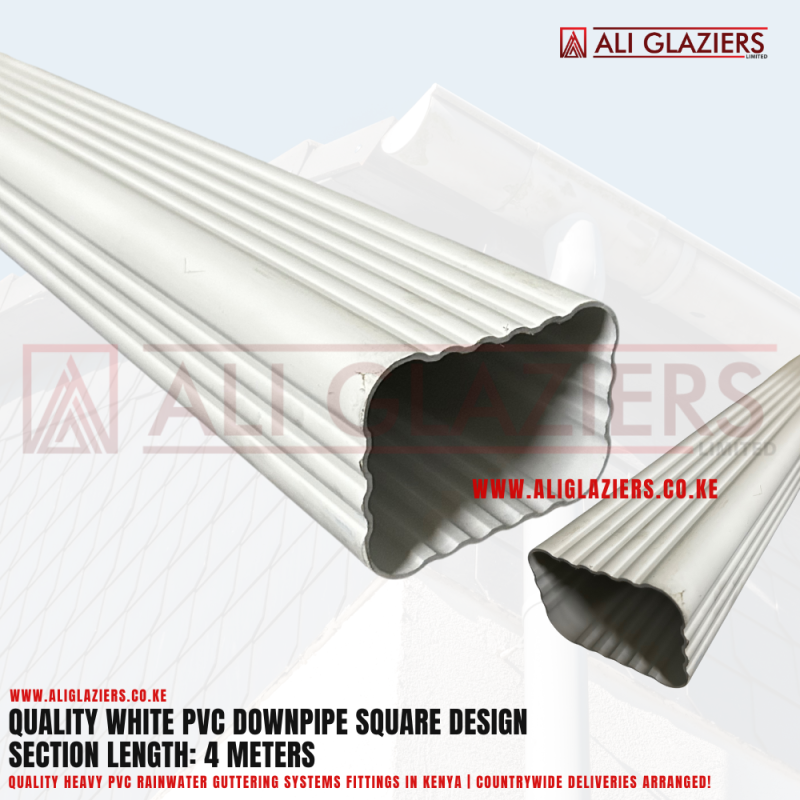
PVC
PVC downpipes are popular because they are:
- Affordable
- Lightweight
- Rust-resistant
- Easy to install
They are suitable for many residential projects.
Aluminium
Aluminium provides:
- Premium appearance
- Strong corrosion resistance
- Long service life
It is suitable for modern homes and commercial projects.
Galvanised Steel
Steel downpipes provide:
- Strength
- Heavy-duty performance
However, coating protection is important, especially in humid environments.
PVC vs Metal in Kenya
| FeaturePVC DownpipesMetal Downpipes | ||
| Cost | Lower | Higher |
| Weight | Lightweight | Heavier |
| Rust resistance | Excellent | Depends on coating |
| Strength | Moderate | Higher |
| Appearance | Practical | Premium |
| Installation | Easier | Requires skilled handling |
Different Kenyan Climates
Nairobi
Nairobi buildings require drainage systems that handle:
- Seasonal storms
- Dust accumulation
- Residential runoff
Correct sizing helps prevent overflow.
Mombasa
Coastal buildings face:
- Humidity
- Salt exposure
- Heavy tropical rainfall
Corrosion-resistant materials are recommended.
Kisumu
High rainfall conditions require:
- Adequate pipe capacity
- Correct gutter connections
- Reliable ground drainage
Nakuru and Eldoret
Temperature changes and seasonal rains make proper installation important.
Connecting to Ground Drainage
A downpipe should discharge water safely away from the building.
Common discharge options include:
- Drain channels
- Soak pits
- Rainwater tanks
- Surface drainage systems
Poor discharge design can create:
- Foundation problems
- Muddy areas
- Water pooling
Rainwater Harvesting in Kenya
Many Kenyan properties use to collect rainwater.
A well-designed system can connect downpipes to:
- Storage tanks
- Underground reservoirs
- Water collection systems
Important considerations include:
- Clean gutters
- Proper filtration
- Correct pipe sizing
Common Downpipe Installation Mistakes
Using the Wrong Pipe Size
Small pipes may not handle heavy rainfall.
Too Few
Large roofs need sufficient drainage points.
Weak Wall Fixings
Poor brackets can cause pipes to move or detach.
Incorrect Ground Discharge
Water should not collect near foundations.
Ignoring Maintenance
Blocked systems reduce drainage efficiency.
How to Maintain in Kenya
Regular maintenance improves performance.
Clean Gutters Frequently
Blocked gutters increase pressure on downpipes.
Check Pipe Connections
Inspect:
- Joints
- Outlets
- Clips
Remove Blockages
Leaves and debris can restrict water flow.
Inspect After Heavy Rain
Storms may reveal drainage problems.
Cost Factors in Kenya
The cost depends on:
- Pipe material
- Diameter
- Number required
- Accessories
- Installation height
A complete installation may include:
- Downpipes
- Connectors
- Clips
- Shoes
- Labour
Choosing the cheapest option may increase future repair costs.
Choosing Quality for Your Building
A reliable roofing supplier should provide:
- Correct sizing advice
- Quality drainage accessories
- Installation guidance
- Compatible gutter systems
Ali Glaziers Roofing Division supplies roofing solutions and accessories designed for Kenyan weather conditions.
Explore roofing products through our Ali Glaziers roofing shop.
You can also learn more about our roofing expertise through our Ali Glaziers Roofing Division page.
Frequently Asked Questions About Downpipes in Kenya
What size is best for a house in Kenya?
Most homes use 75mm downpipes, but larger roofs may require 90mm or 100mm pipes.
How far apart should be installed?
Spacing depends on roof size, gutter length, rainfall intensity, and building design.
Can PVC handle heavy rain?
Yes. Properly sized and installed PVC downpipes can handle heavy rainfall.
How are fixed to block walls?
Downpipes are fixed using clips, brackets, or straps attached securely to masonry walls.
Why do overflow?
Overflow usually occurs because of blocked gutters, undersized pipes, or insufficient drainage points.
Are metal better than PVC?
Metal offers greater strength, while PVC provides affordability and rust resistance. The best choice depends on the project.
Conclusion: Install the Right for Reliable Rainwater Control
Choosing the correct downpipes in Kenya protects buildings from water damage while improving overall roof drainage performance.
The right system depends on:
- Roof area
- Gutter size
- Rainfall conditions
- Building design
- Material selection
A properly installed downpipe system prevents splashback, protects foundations, and ensures rainwater is safely managed.
Whether your project is in Nairobi, Mombasa, Kisumu, Nakuru, Eldoret, or another region in Kenya, Ali Glaziers Roofing Division provides professional roofing solutions and drainage guidance.
Explore our roofing solutions through our polycarbonate roofing sheets category or contact our specialists for advice on gutters and downpipes.
Upgrade to Unbreakable Roofing with Ali Glaziers Today!
Whether you are an architect designing a modern mall, a contractor securing an industrial warehouse, or a homeowner upgrading your patio pergola, Ali Glaziers Roofing Division has the perfect solution for the Kenyan climate.
✔ Virtually Indestructible: Polycarbonate materials that are 200x stronger than glass. ✔ UV-Stabilized: Advanced technology to prevent yellowing and sun damage. ✔ Fast & Reliable Delivery: Countrywide, same-day, and next-day delivery options across Nairobi, Mombasa, Kisumu, Nakuru, Eldoret, and beyond.
Ready to transform your roof with modern, transparent solutions?
Visit Us: Funzi Road Branch: End of Funzi Road, Industrial Area – Ali Glaziers LTD Building, Nairobi.
Call/WhatsApp: +254 (0) 716 259 682 | +254 (0) 722 522 452
Email: info@aliglaziers.com
Shop Online: https://roofing.aliglaziers.com/shop/