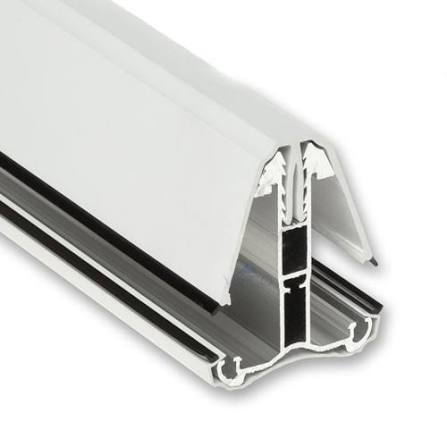

Polycarbonate thickness Kenya guide: compare 8mm, 10mm, solid and twin-wall sheets by span, light transmission, thermal performance and load.
Polycarbonate thickness in Kenya should be selected according to the application, support spacing, required light transmission, thermal performance and structural requirements. An 8mm or 10mm multiwall sheet may suit some roofing applications, while solid polycarbonate can be preferable where impact resistance, clarity or a different structural performance is required.
What Does Polycarbonate Thickness Mean?
Polycarbonate thickness refers to the overall thickness of the sheet, but thickness alone does not describe the complete performance of a polycarbonate panel.
Two sheets with the same thickness can have different internal structures.
Shop Solid Polycarbonate Sheets
View all Solid Polycarbonate Sheets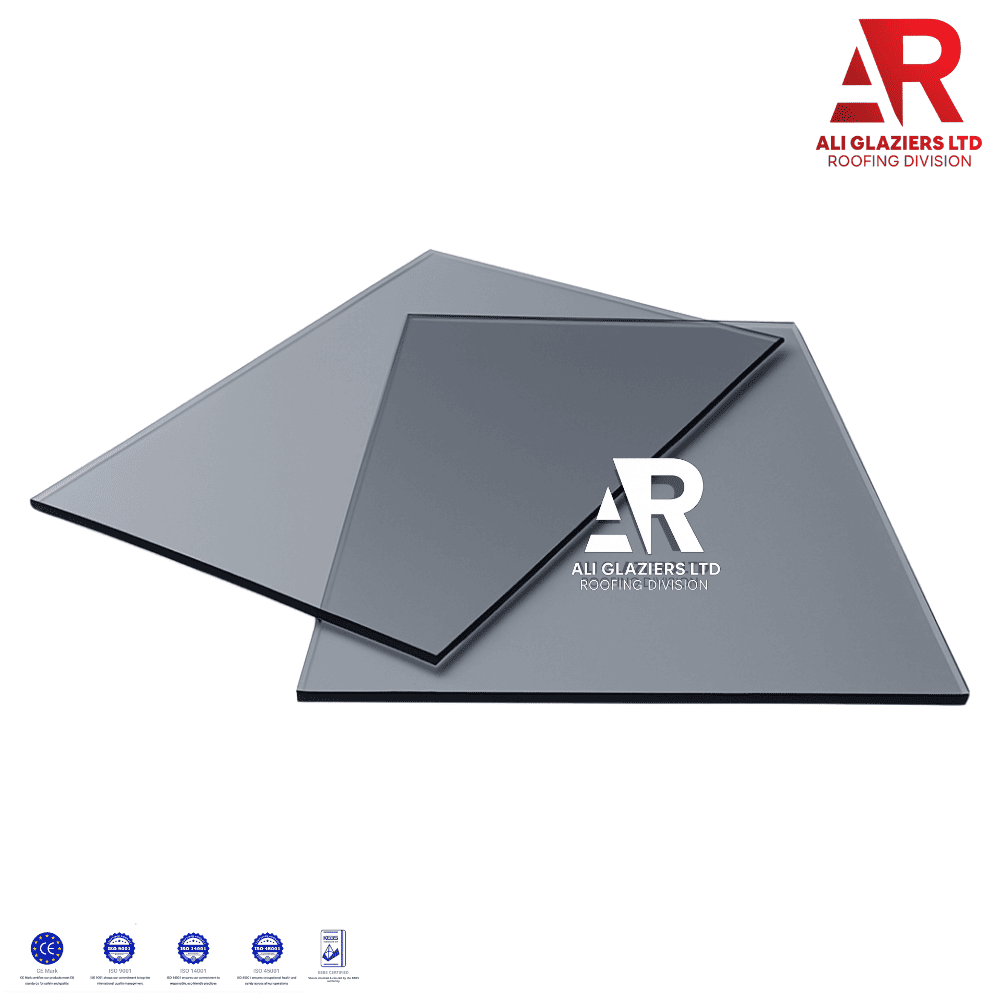
GREY SOLID POLYCARBONATE SHEETS
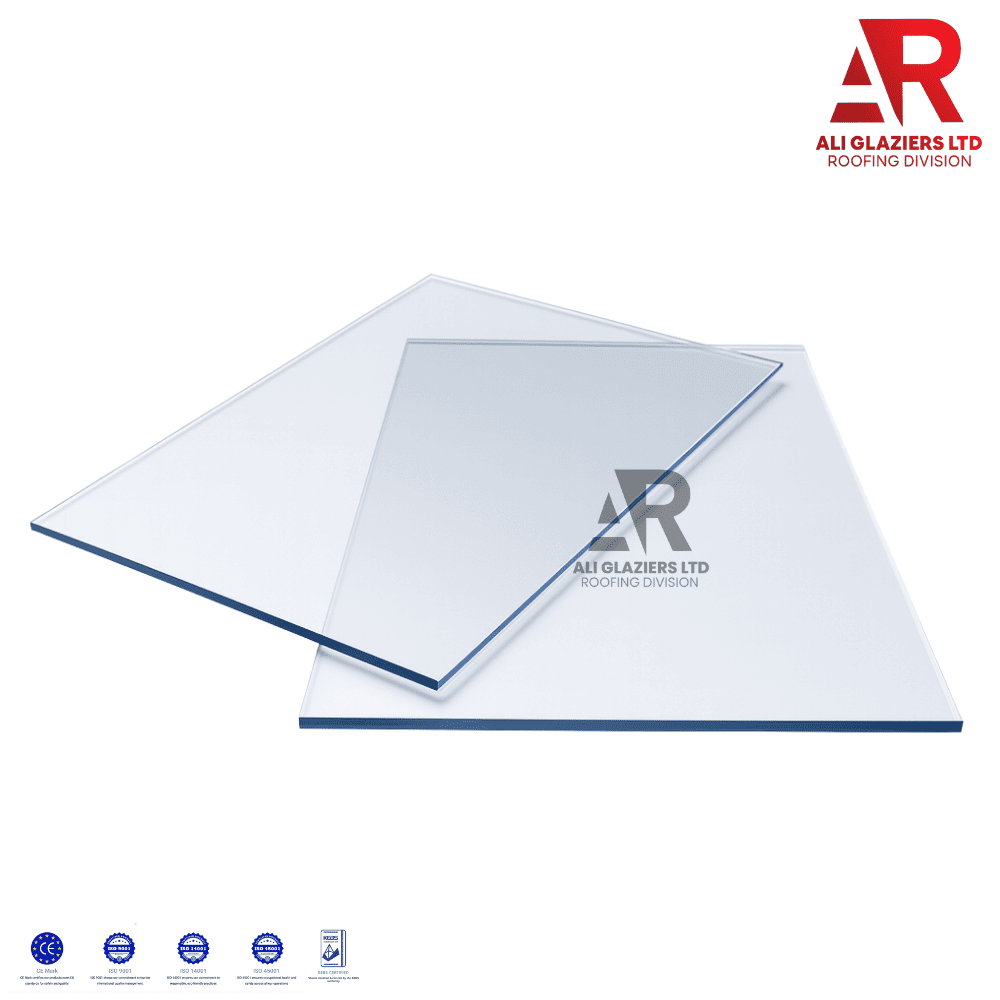
CLEAR SOLID POLYCARBONATE SHEETS
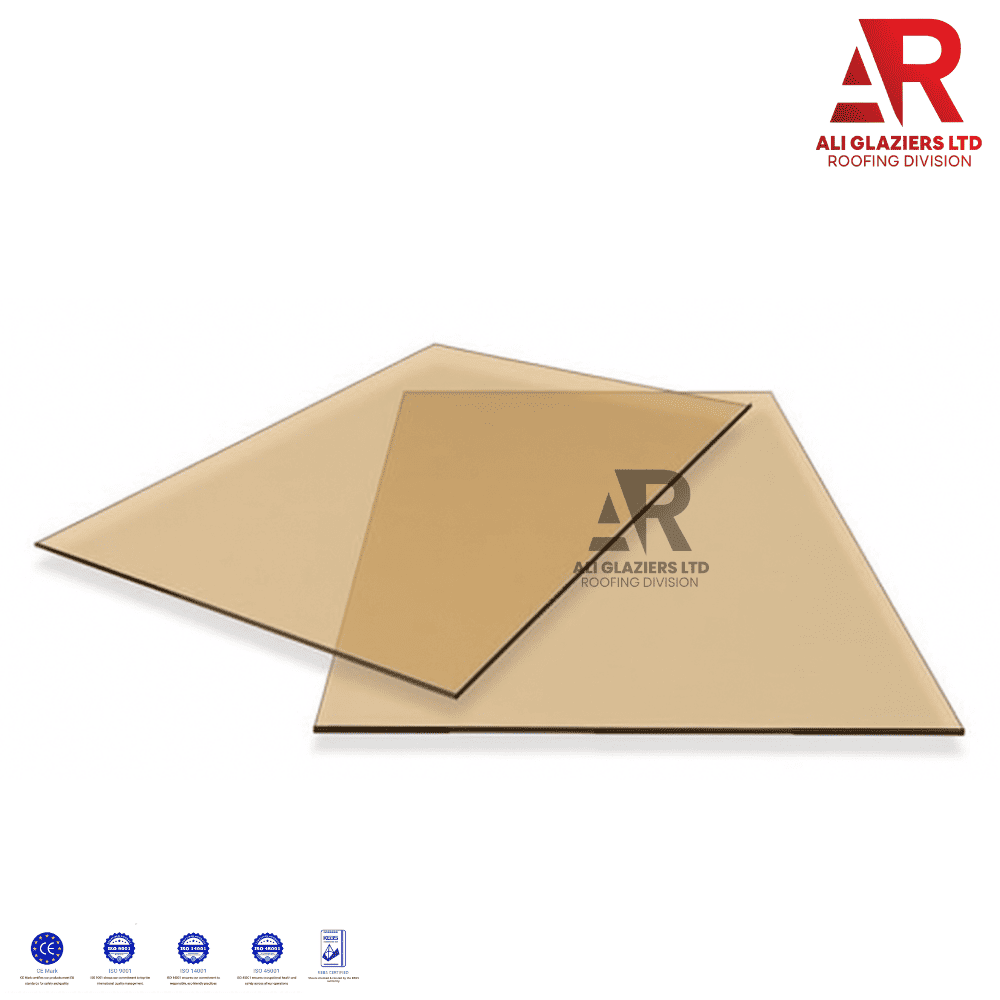
BRONZE SOLID POLYCARBONATE SHEETS
For example:
- Solid polycarbonate
- Twin-wall polycarbonate
- Multiwall polycarbonate
can have substantially different properties despite being available in similar thicknesses.
Polycarbonate Thickness Kenya: What Should You Check?
When choosing polycarbonate thickness in Kenya, look beyond millimetres and consider span, support spacing, wind exposure, impact requirements, insulation and daylight requirements.
Important factors include:
- Sheet thickness
- Wall structure
- Sheet dimensions
- Support spacing
- Roof pitch
- Wind loading
- Impact resistance
- Thermal performance
- Light transmission
- UV protection
The manufacturer's technical data should be used for the final product selection.
8mm Polycarbonate
8mm polycarbonate can provide a practical balance between weight, rigidity, daylight transmission and thermal performance for suitable applications.
Depending on the product, 8mm sheets may be available in multiwall constructions.
Potential applications include:
- Canopies
- Walkways
- Rooflights
- Patio covers
- Vertical glazing
- Lightweight roofing
The actual allowable span should always be confirmed from the product's technical information.
10mm Polycarbonate
10mm polycarbonate provides a thicker construction than 8mm and may offer increased rigidity and thermal performance in suitable multiwall systems.
It can be considered for applications such as:
- Roofing
- Canopies
- Commercial structures
- Greenhouses
- Partitions
- Wall glazing
However, a thicker sheet is not automatically the best choice.
8mm vs 10mm Polycarbonate
The choice between 8mm and 10mm polycarbonate depends on the required performance rather than thickness alone.
| Factor8mm10mm | ||
| Thickness | Lower | Higher |
| Weight | Generally lower | Generally higher |
| Rigidity | Product dependent | Generally higher |
| Thermal performance | Product dependent | Can be higher |
| Light transmission | Product dependent | Product dependent |
| Cost | Often lower | Often higher |
| Suitable span | Manufacturer dependent | Manufacturer dependent |
Always compare the actual manufacturer's datasheet before specifying either thickness.
What Is Twin-Wall Polycarbonate?
Twin-wall polycarbonate consists of two outer layers connected by internal webs, creating an enclosed air space between the surfaces.
This construction can provide:
- Low weight
- Thermal insulation
- Good stiffness for its weight
- Diffused daylight
- Practical roofing performance
Twin-wall sheets are widely used where both daylight and thermal performance are required.
What Is Solid Polycarbonate?
Solid polycarbonate is a dense, continuous sheet without the internal hollow channels found in multiwall products.
It can offer:
- High impact resistance
- Clear optical appearance
- Good transparency
- A solid surface
- Easier cleaning compared with some multiwall structures
Its performance and cost differ from multiwall sheets.
Twin-Wall vs Solid Polycarbonate
Twin-wall vs solid polycarbonate is primarily a choice between different performance characteristics, not simply different thicknesses.
| FeatureTwin-WallSolid | ||
| Internal structure | Hollow chambers | Solid sheet |
| Weight | Generally lower | Generally higher |
| Thermal insulation | Generally better | Product dependent |
| Transparency | Often diffused | Usually clearer |
| Impact resistance | High | Very high for suitable grades |
| Appearance | Diffused | Glass-like clarity possible |
| Typical use | Roofing and daylighting | Glazing, screens and impact-resistant applications |
The right option depends on the project.
Polycarbonate for Roofing
For roofing applications, multiwall polycarbonate can provide a combination of low weight, daylight transmission and thermal insulation.
Before specifying it, check:
- Roof pitch
- Support spacing
- Sheet orientation
- Wind exposure
- Fixing system
- Thermal movement
- Drainage
Roofing panels should be installed according to the manufacturer's requirements.
Polycarbonate for Vertical Glazing
Solid or multiwall polycarbonate can be used for vertical glazing, depending on the required appearance, insulation and impact performance.
Applications can include:
- Screens
- Partitions
- Commercial walls
- Industrial glazing
- Walkways
- Sports facilities
Vertical installation may have different support and drainage requirements from roofing.
Polycarbonate and Span
Sheet thickness and wall structure can influence the span a polycarbonate panel can accommodate, but span limits must come from the manufacturer's loading tables.
Do not assume:
Thicker sheet = any span
The actual allowable span depends on:
- Sheet construction
- Width
- Loading
- Support conditions
- Wind pressure
- Fixing system
- Deflection limits
Polycarbonate and Wind Loading
Polycarbonate roofs and panels must be adequately designed and fixed for the wind conditions at the installation site.
Wind can create:
- Uplift
- Pressure
- Panel movement
- Fixing stress
- Edge damage
Large exposed canopies and roofs require particular attention to fixing patterns and structural support.
Polycarbonate and Thermal Expansion
Polycarbonate expands and contracts with temperature changes, so installation must allow appropriate movement.
This is particularly important for large sheets exposed to direct sunlight.
The system should account for movement through:
- Oversized fixing holes where specified
- Appropriate connectors
- Expansion gaps
- Correct fixing methods
Never restrict movement simply to make the panel fit tightly.
Polycarbonate UV Protection
UV protection is an important consideration because prolonged sunlight exposure can affect the long-term performance of polycarbonate.
When buying polycarbonate, establish:
- Which side has UV protection
- Whether the UV layer is co-extruded
- Installation orientation
- Manufacturer warranty
- Expected outdoor service life
Installing the protected side incorrectly can compromise the intended performance.
Polycarbonate Light Transmission
Light transmission varies according to sheet construction, colour, thickness and surface treatment.
Clear sheets can provide high levels of daylight.
Opal or diffused products can distribute light more evenly and reduce glare.
The right choice depends on whether the priority is:
- Maximum transparency
- Diffused daylight
- Solar control
- Privacy
- Reduced glare
Polycarbonate and Heat Control
Polycarbonate roofing can admit significant solar radiation, making heat management important in buildings exposed to strong sunlight.
Possible solutions include:
- Opal or diffused sheets
- Solar-control products
- Multiwall construction
- Ventilation
- Shading
- Appropriate roof orientation
Thickness alone should not be relied upon to control heat gain.
Polycarbonate for Greenhouses
Greenhouse polycarbonate needs to balance light transmission with thermal performance and environmental durability.
Multiwall polycarbonate may be considered where:
- Insulation is important
- Diffused light is desirable
- Durability is required
- A more rigid covering is preferred
The crop and greenhouse design should determine the final specification.
Polycarbonate for Canopies
Canopy roofing often benefits from polycarbonate because it provides weather protection while allowing daylight through the roof.
It can be used for:
- Carports
- Walkways
- Entrance canopies
- Patios
- Commercial shelters
The structure and fixing system must be designed for the selected panel.
Does Thicker Polycarbonate Always Mean Better?
No. The thickest polycarbonate is not necessarily the most suitable because performance depends on sheet construction, loading, light requirements and the supporting structure.
For example, a well-designed multiwall sheet may provide better thermal insulation than a thicker solid sheet.
Similarly, a solid sheet may be preferable where optical clarity or impact performance is more important.
Polycarbonate Sheet Cost
Polycarbonate price is influenced by thickness, wall structure, dimensions, coating, colour and manufacturer specification.
When comparing quotations, check whether suppliers are offering the same:
- Thickness
- Wall structure
- Sheet dimensions
- UV protection
- Colour
- Warranty
- Accessories
A lower price may represent a different specification rather than a genuine saving.
Common Polycarbonate Specification Mistakes
Choosing polycarbonate based only on thickness or price can lead to poor performance and unnecessary costs.
Comparing Thickness Without Wall Structure
8mm solid and 8mm twin-wall are not equivalent products.
Ignoring Support Spacing
The sheet must be compatible with the structural system.
Forgetting UV Protection
Outdoor sheets require appropriate UV protection.
Choosing Maximum Transparency Automatically
Clearer is not always better for heat control.
Ignoring Thermal Movement
Large sheets require movement allowance.
Using the Wrong Fixing System
Connectors and fixings should match the sheet.
Polycarbonate Buying Checklist
Before purchasing polycarbonate, confirm the complete specification rather than asking for a thickness alone.
- Thickness confirmed
- Solid or multiwall construction confirmed
- Twin-wall or other wall structure confirmed
- Sheet dimensions confirmed
- Light transmission checked
- UV protection confirmed
- Support spacing established
- Wind loading considered
- Thermal movement allowance provided
- Connector system selected
- Fixings confirmed
- Roof pitch checked
- Manufacturer warranty reviewed
- Installation instructions available
Final Thoughts
Polycarbonate thickness in Kenya should be selected as part of a complete roofing or glazing specification. An 8mm or 10mm sheet may be suitable for different applications, while the choice between solid and twin-wall construction can have an even greater effect on thermal performance, weight, clarity and installation.
The key comparison is not simply:
8mm vs 10mm
It is:
Thickness + wall structure + span + loading + light + heat + fixing system
That approach makes it easier to select a polycarbonate product that performs properly for the intended building.