
Roof valley leak Kenya guide: learn how ridge, hip and valley detailing, flashing, caps and fixings prevent water ingress and costly roof damage.
Ridge, hip and valley details are among the most important parts of a pitched roof because they manage water, wind and movement at roof junctions. Poor ridge cap fixing, inadequate valley detailing and badly installed flashing can create leaks even when the roofing sheets themselves are correctly specified.
Why Ridge, Hip and Valley Detailing Matters
Roof junctions are vulnerable because several roof planes, sheets and accessories meet in a relatively small area. These junctions need to shed water while remaining secure during wind, temperature changes and normal building movement.
Common problem areas include:
Shop Tent Accessories
View all Tent Accessories
- Ridge caps
- Hip caps
- Roof valleys
- Flashings
- Sheet junctions
- Wall-to-roof connections
- Penetrations
- Eaves
A roof should therefore be designed as a complete water-management system rather than simply a collection of sheets.
Roof Valley Leak Kenya: Why Valleys Fail
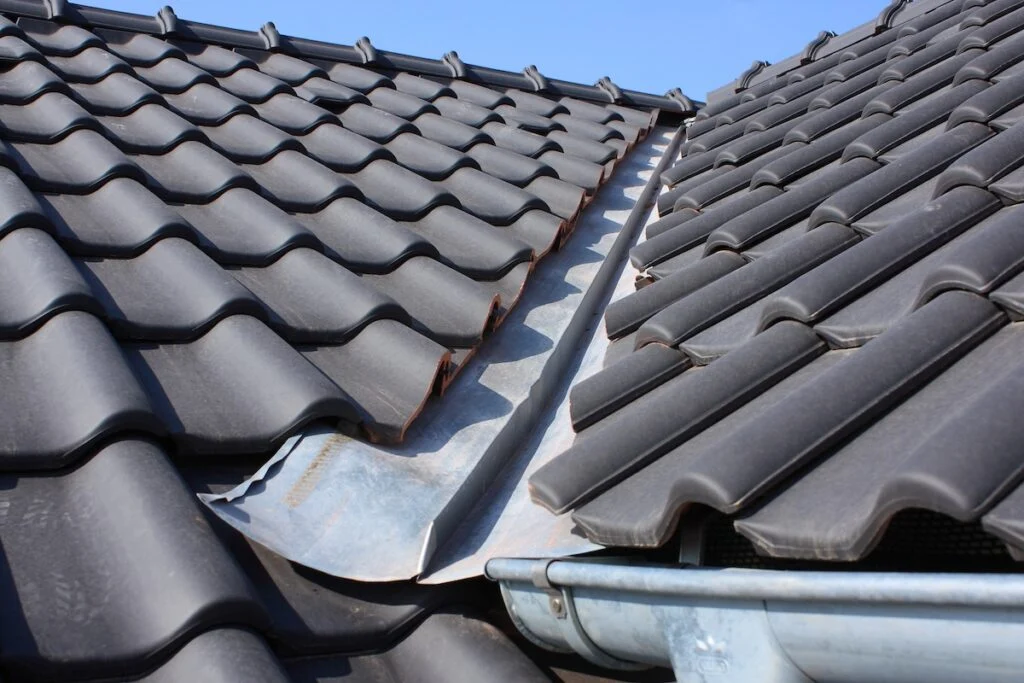
A roof valley leak in Kenya can occur when water flow, sheet overlaps, flashing or valley width has not been properly considered. Valleys receive concentrated runoff from two roof slopes, making their detailing particularly important.
Potential causes include:
- Narrow valley channels
- Incorrect valley flashing
- Poor sheet cuts
- Inadequate overlaps
- Blocked drainage
- Exposed fixings
- Debris accumulation
- Insufficient roof pitch
The valley detail should be designed before the roofing sheets are installed.
What Is a Roof Valley?
A roof valley is the internal junction where two sloping roof surfaces meet and direct rainwater toward the eaves or drainage point.
Unlike a ridge, where water generally falls away from the junction, a valley collects water.
That makes it one of the most critical waterproofing locations on a pitched roof.
Open and Closed Valley Details
The basic valley design determines how roofing sheets meet the drainage channel and how much of the valley flashing remains exposed.
Depending on the roof system, a valley may use:
- Open valley flashing
- Closed valley detailing
- Purpose-made valley troughs
- Valley boards
- Additional waterproofing layers
The appropriate detail depends on the roof covering and manufacturer's installation requirements.
Valley Flashing
Valley flashing provides a controlled surface for collecting and directing water where two roof slopes meet.
A properly designed flashing should:
- Direct water toward the eaves
- Prevent water entering beneath the sheets
- Accommodate appropriate movement
- Maintain adequate overlap
- Avoid unnecessary penetrations
Valley flashing dimensions should be appropriate for the roof geometry and expected water flow.
Ridge Cap Fixing
Ridge caps protect the highest roof junction and should be securely fixed while maintaining a weather-resistant connection with the roofing sheets.
Problems can arise when ridge caps are:
- Under-fixed
- Over-tightened
- Poorly aligned
- Installed without appropriate closures
- Fixed through unsuitable locations
- Not compatible with the sheet profile
The fixing arrangement should follow the roofing system's requirements.
What Does a Ridge Cap Do?
A ridge cap covers the junction at the top of a pitched roof and helps prevent rain and wind-driven water from entering the roof system.
It may also contribute to:
- Roof appearance
- Wind resistance
- Ventilation
- Weather protection
Different sheet profiles require different ridge accessories.
Hip Roof Detailing
A hip is an external junction where two sloping roof surfaces meet, and it requires a properly aligned hip cap or flashing system.
Hip details should provide:
- Continuous weather protection
- Secure fixing
- Appropriate sheet overlap
- Clean transitions
- Adequate drainage away from the junction
The hip detail should be coordinated with the roof covering before installation.
Ridge vs Hip vs Valley
Ridges and hips shed water away from the junction, while valleys collect water and require particularly careful drainage detailing.
| DetailFunctionMain Risk | ||
| Ridge | Covers roof apex | Wind-driven rain |
| Hip | Covers external sloping junction | Poor alignment and exposed gaps |
| Valley | Collects roof runoff | Water overflow and leakage |
| Flashing | Seals transitions | Poor overlap or fixing |
| Closure | Blocks openings | Incorrect profile fit |
Understanding this difference helps identify where additional attention is required.
Roof Flashing Detail
Roof flashing is used where roofing materials meet junctions, walls, penetrations and changes in direction that cannot be reliably waterproofed by the sheets alone.
Common flashing locations include:
- Valleys
- Ridges
- Hips
- Abutments
- Parapets
- Chimneys
- Roof penetrations
- Wall junctions
Flashing should direct water outward rather than trapping it behind the roofing material.
Why Flashing Overlaps Matter
Flashing pieces must overlap in a direction that follows the natural flow of water.
An incorrectly oriented overlap can create a path for water to enter.
The installation should therefore consider:
- Water direction
- Roof pitch
- Joint position
- Seal requirements
- Thermal movement
- Fixing locations
Never assume that adding more sealant will correct a fundamentally poor flashing detail.
Roof Penetrations Near Ridges and Valleys
Pipes, vents, solar equipment and other penetrations can become leak points when they interrupt the roof's water-shedding surface.
Penetrations near valleys require particular care because they can obstruct water flow or create complex flashing junctions.
Where possible, penetrations should be planned alongside the roof layout.
Ridge Ventilation
Some roof systems use ventilated ridge details to allow warm or moist air to escape while maintaining weather protection.
A ventilated ridge may help with:
- Roof-space ventilation
- Moisture management
- Condensation control
- Indoor comfort
However, ventilation details must be compatible with the roofing profile and local design requirements.
Ridge Closures
Profile-specific ridge closures can help close gaps beneath a ridge cap while maintaining a better fit between the roofing sheet and accessory.
Closures may help prevent:
- Wind-driven rain
- Dust
- Insects
- Birds
The closure must match the sheet profile rather than being selected as a generic accessory.
Valley Debris and Maintenance
Leaves, dust and other debris can accumulate in valleys and restrict water flow, increasing the risk of overflow during heavy rainfall.
This is particularly relevant where roofs are:
- Near trees
- Surrounded by dust
- Located in commercial compounds
- Difficult to access for maintenance
Valleys should be accessible for inspection and cleaning where practical.
Roof Pitch and Valley Performance
Roof pitch affects how quickly water moves across roofing sheets and through valley systems.
A low-pitched roof may require more careful detailing because water moves more slowly and may remain on the roof for longer.
The selected roofing material must therefore be compatible with the proposed pitch.
Ridge, Hip and Valley Fixings
Roof accessories need adequate mechanical fixing to resist wind while avoiding damage to the roofing sheets.
Depending on the roofing system, fixings may include:
- Roofing screws
- Stitching screws
- Clips
- Bolts
- Profile-specific fasteners
Fixing density and locations should follow the system design and manufacturer guidance.
Sealants at Roof Junctions
Sealants can support waterproofing at selected junctions but should complement, not replace, proper flashing and mechanical detailing.
Sealant can deteriorate because of:
- UV exposure
- Temperature changes
- Building movement
- Poor surface preparation
- Incompatible materials
A mechanically sound junction generally provides a more durable solution than relying on sealant alone.
Common Ridge and Valley Mistakes
Many roof leaks originate from installation errors at junctions rather than defects in the main roofing sheets.
Incorrect Valley Flashing
The flashing may be too narrow, poorly positioned or incorrectly overlapped.
Poor Ridge Cap Fixing
Loose or poorly aligned ridge caps can allow wind-driven rain underneath.
Wrong Profile Closures
A closure that does not match the sheet profile may leave gaps.
Too Many Exposed Fixings
Unnecessary penetrations increase potential leak points.
Poor Sheet Cutting
Rough or inaccurate cuts can compromise junctions.
Blocked Valleys
Debris can restrict water flow and cause overflow.
Excessive Reliance on Sealant
Sealant cannot compensate for fundamentally poor roof geometry.
How to Inspect a Roof Junction
A roof inspection should concentrate on junctions, transitions and drainage paths rather than only looking at the middle of the roofing sheets.
Check for:
- Loose ridge caps
- Cracked or failed sealant
- Corrosion
- Open sheet gaps
- Damaged flashing
- Poor overlaps
- Blocked valleys
- Exposed fasteners
- Water staining underneath
- Evidence of previous repairs
Early detection can prevent a small junction problem from becoming major water damage.
Ridge, Hip and Valley Buying Checklist
The accessories should be selected together with the roofing profile to ensure that the complete system fits and performs as intended.
Before purchasing, confirm:
- Roofing profile identified
- Ridge cap selected
- Hip accessories selected
- Valley flashing specified
- Profile closures selected
- Flashing thickness/material confirmed
- Fixings confirmed
- Sealant compatibility checked
- Roof pitch confirmed
- Drainage route established
- Ventilation requirements considered
- Maintenance access considered
Final Thoughts
Ridge, hip and valley detailing deserves as much attention as the roofing sheets themselves because these junctions control how water and wind interact with the roof. A properly installed roof valley directs concentrated runoff safely, while correctly fixed ridge and hip accessories protect exposed roof junctions.
The key principle is simple:
Design the water path first, then select the flashing, accessories and fixing system around it.
For a durable Kenyan roof, do not judge the installation only by the quality of the sheets. Examine the ridge cap fixing, hip detailing, valley flashing and every roof junction where water changes direction.


