Wondering how many roofing screws per sheet you need? This Kenyan roofing guide explains fixing patterns for box profile, IT5, and corrugated roofing sheets, proper screw spacing, crest vs. valley fixing, and common installation mistakes to help you build a durable, leak-free roof.
Why the Correct Number of Roofing Screws Matters
When installing a new roof, one of the most common questions homeowners and contractors ask is "How many these screws per sheet should I use?" While roofing sheets often receive the most attention, the fasteners holding them in place are equally important.
Using too few screws can leave roofing sheets vulnerable to wind uplift, movement, and leaks. On the other hand, using too many screws increases costs unnecessarily and may create additional penetration points that could compromise the roof if installed incorrectly.
For roofing projects in Kenya, the correct screw count depends on several factors, including the roofing profile, sheet length, roof pitch, wind exposure, and the spacing of the supporting purlins.
Shop Tent Accessories
View all Tent Accessories
Whether you're installing box profile mabati, IT5 roofing sheets, corrugated iron sheets, or transparent roofing panels, following the correct fixing pattern ensures your roof remains secure for many years.
Before starting your project, make sure you have high-quality These screws & Fasteners specifically designed for roofing applications:
https://roofing.aliglaziers.com/product-category/roofing-accessories/roofing-screws-fasteners/
This guide explains the recommended fixing patterns, screw spacing, crest versus valley fixing, and common installation mistakes for roofing projects across Kenya.
Why Roofing Screw Count Is Important
These screws do much more than simply hold roofing sheets in place.
Proper screw spacing helps:
- Prevent roof leaks
- Improve wind resistance
- Reduce sheet vibration
- Prevent sheet lifting
- Increase roof lifespan
- Maintain structural stability
A properly fixed roof distributes loads evenly across the supporting framework, reducing stress on individual screws.
Factors That Determine These screws Per Sheet
There is no universal number that fits every roofing project.
The required number of screws depends on:
- Roofing sheet profile
- Sheet width
- Sheet length
- Purlin spacing
- Roof pitch
- Wind zone
- Building height
- Manufacturer recommendations
Professional installers consider all these factors before determining the fixing pattern.
Typical Roofing Screw Requirements in Kenya
The following table provides general guidance for common roofing profiles.
| Roofing TypeTypical Screws Per Sheet* | |
| Corrugated Roofing | 12–18 |
| Box Profile Roofing | 14–20 |
| IT5 Roofing Sheets | 18–24 |
| Ridge Caps | As recommended per fixing point |
*Actual requirements may vary depending on sheet dimensions, purlin spacing, roof design, and manufacturer specifications.
Roofing Screw Patterns for Different Roofing Sheets
Box Profile Roofing Sheets
Box profile roofing is one of Kenya's most popular roofing options for residential, commercial, and industrial buildings.
Browse our durable Box Profile Mabati Sheets for projects requiring strength, modern aesthetics, and long-lasting performance:
https://roofing.aliglaziers.com/product-category/roofing-sheets/box-profile-roofing-sheets/
Because of the raised rib design, screws are typically installed through the crest where recommended by the manufacturer.
Typical fixing includes:
- Screws at every purlin
- Additional fasteners along roof edges
- Increased fixing near eaves and ridges
- Extra screws in high-wind areas
IT5 Roofing Sheets
IT5 roofing sheets have a wider profile and deeper ribs than standard box profile sheets.
Their larger surface area often requires:
- More fixing points
- Consistent spacing
- Additional edge fixings
- Stronger wind resistance
Proper screw distribution helps prevent sheet movement during heavy rainfall and strong winds.
Corrugated Roofing Sheets
Corrugated roofing remains a popular choice for homes, agricultural buildings, and workshops.
Explore our range of Corrugated Roofing Sheets designed for Kenyan weather conditions:
https://roofing.aliglaziers.com/product-category/roofing-sheets/corrugated-roofing-sheets/
Corrugated sheets generally require screws installed at regular intervals across each supporting purlin while maintaining proper overlap between adjacent sheets.
Crest vs. Valley Fixing: Which Is Correct?
One of the most debated topics during roofing installation is whether these screws should be installed on the crest or in the valley of the roofing sheet.
Crest Fixing
For many metal roofing profiles, fixing through the crest is recommended because:
- Water naturally drains through the valleys.
- Screws remain above standing water.
- The risk of leaks is reduced.
- EPDM washers experience less continuous moisture.
Many manufacturers recommend crest fixing for box profile and corrugated roofing sheets, but always follow the specific installation instructions supplied with your roofing product.
Valley Fixing
Some specialized roofing systems require valley fixing.
These systems rely on:
- Manufacturer-approved fasteners
- Specific support designs
- Correct sealing techniques
Never assume that one fixing method suits every roofing profile.
Importance of EPDM Washers
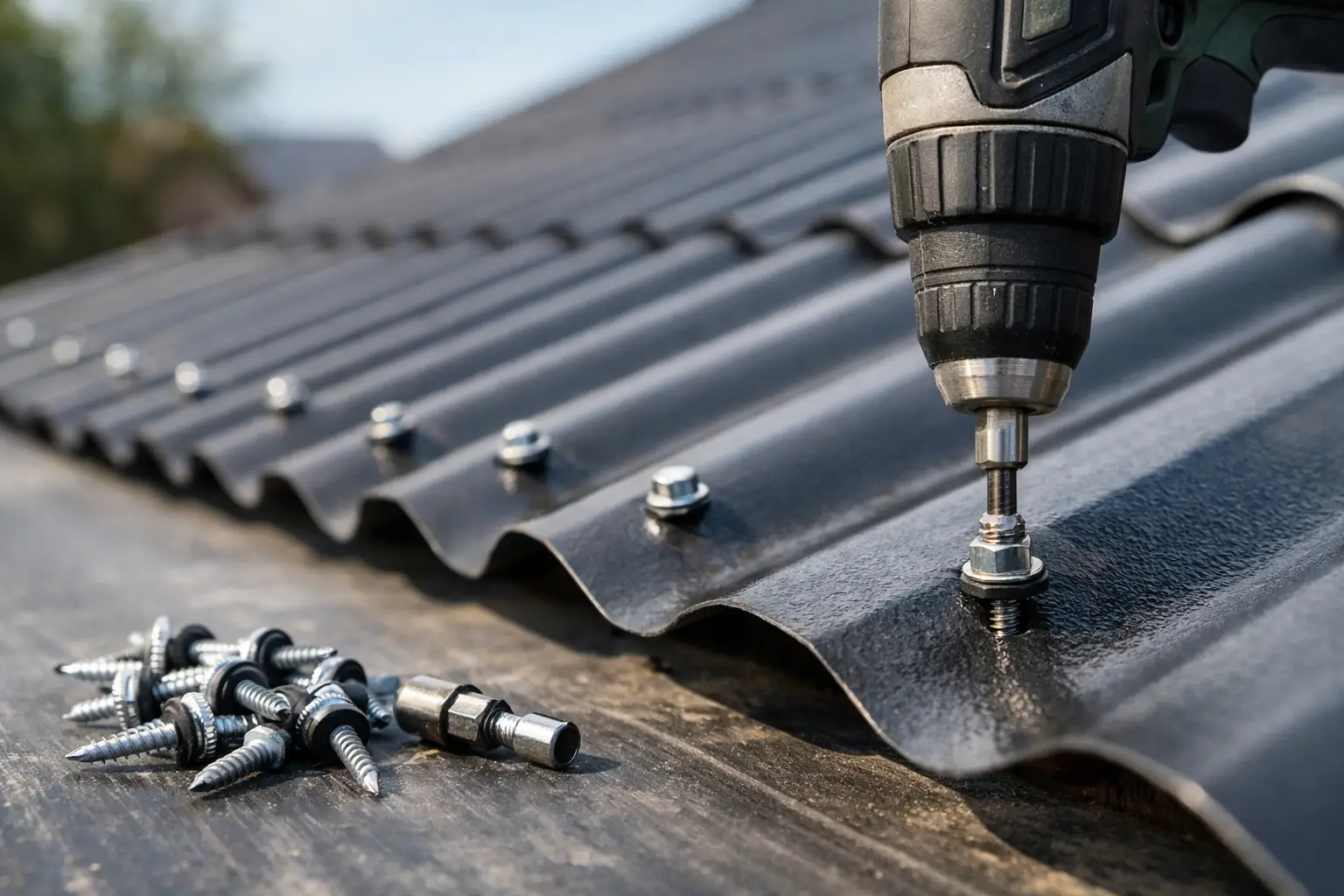
Every roofing screw should include a bonded EPDM washer.
The washer forms a waterproof seal around each screw while allowing slight movement caused by temperature changes.
Quality EPDM washers provide resistance against:
- UV rays
- Heavy rainfall
- Heat
- Ozone
- Weathering
Avoid replacing roofing washers with ordinary rubber washers, as they deteriorate much faster.
Proper Screw Spacing
Correct spacing is just as important as the number of screws.
These screws should be installed:
- Evenly across each purlin
- At recommended overlap points
- With additional fixings near roof edges
- According to manufacturer guidelines
Consistent spacing distributes loads evenly across the roof structure.
Roof Areas That Need Extra Screws
Certain parts of the roof experience greater wind forces and therefore require additional fixing.
These include:
Eaves
Roof edges experience uplift during strong winds.
Extra screws improve stability.
Ridge Caps
The ridge is exposed to wind from multiple directions and requires secure fastening.
Roof Verges
Roof edges should always receive additional fasteners to resist wind uplift.
High-Wind Areas
Buildings located in exposed locations may require closer screw spacing than standard installations.
These screws for Polycarbonate Roofing
Transparent roofing materials require careful installation because they expand and contract with temperature changes.
Our premium Polycarbonate Roofing Sheets are designed for patios, pergolas, skylights, walkways, and commercial projects:
https://roofing.aliglaziers.com/product-category/polycarbonate-roofing-sheets/
When installing polycarbonate roofing:
- Use compatible these screws.
- Install approved sealing washers.
- Avoid over-tightening.
- Allow for thermal expansion.
Common Mistakes When Fixing Roofing Sheets
Using Too Few Screws
Insufficient fasteners increase the risk of:
- Roof movement
- Wind damage
- Leaks
- Structural stress
Using Too Many Screws
Excessive screws increase installation costs and create unnecessary roof penetrations.
Poor Screw Alignment
Driving screws at an angle prevents EPDM washers from sealing evenly.
Incorrect Tightening
Over-tightening damages washers.
Under-tightening allows movement and water penetration.
Using Low-Quality Fasteners
Always use corrosion-resistant these screws designed specifically for outdoor roofing applications.
Stone-Coated Roofing Fasteners
Stone-coated roofing systems often use specialized fastening methods depending on the roofing profile.
If you're considering a premium roofing solution, explore our Stone Coated Roofing Tiles that combine durability with elegant architectural styling:
https://roofing.aliglaziers.com/product-category/stone-coated-roofing-tiles/
Always follow the manufacturer's installation recommendations when fixing stone-coated roofing products.
Professional Roofing Advice
Every roof is unique.
Factors such as building height, location, roof pitch, and local weather conditions influence the correct fixing pattern.
The best roofing installations combine:
- Premium roofing sheets
- High-quality these screws
- EPDM sealing washers
- Correct screw spacing
- Professional workmanship
- Manufacturer-approved installation methods
Ali Glaziers Roofing Division supplies quality roofing materials, roofing accessories, and technical guidance for residential, commercial, and industrial roofing projects throughout Kenya.
Frequently Asked Questions
How many these screws per sheet are recommended?
The number depends on the roofing profile and installation requirements. Corrugated sheets often use around 12–18 screws, box profile sheets 14–20, and IT5 sheets 18–24.
Should these screws be installed on the crest or valley?
Many metal roofing systems recommend crest fixing because it reduces the likelihood of water collecting around the screw. Always follow the manufacturer's instructions.
Do roof edges require more screws?
Yes. Roof edges, ridges, and eaves are exposed to greater wind forces and typically require additional fixing.
Can I use ordinary wood screws?
No. These screws include corrosion-resistant coatings and EPDM sealing washers specifically designed for outdoor roofing.
Why do these screws leak?
Leaks usually occur because of incorrect installation, damaged washers, over-tightening, under-tightening, or poor-quality fasteners.
Does Ali Glaziers supply these screws and roofing sheets?
Yes. Ali Glaziers Roofing Division supplies these screws, roofing accessories, mabati sheets, polycarbonate roofing, stone-coated roofing tiles, and other roofing solutions for projects across Kenya.
Conclusion: Secure Your Roof with the Right Fixing Pattern
Knowing how many these screws per sheet to use is essential for building a strong, durable, and weather-resistant roof. While the exact number varies depending on the roofing profile and project requirements, using the correct fixing pattern, maintaining proper screw spacing, and installing quality EPDM-sealed these screws all contribute to long-term roofing performance.
Whether you're roofing a home, warehouse, office, or commercial building, investing in quality materials and professional installation helps protect your property from Kenya's demanding weather conditions.
Ali Glaziers Roofing Division supplies premium roofing sheets, these screws, and roofing accessories backed by expert advice and reliable nationwide delivery.
Upgrade Your Roofing Project with Ali Glaziers Today!
Whether you're a homeowner replacing mabati, a contractor working on a commercial project, or an architect specifying roofing materials, Ali Glaziers Roofing Division provides complete roofing solutions built for Kenya.
Why Choose Ali Glaziers?
- Premium these screws and fasteners
- Durable box profile, IT5, corrugated, and stone-coated roofing
- High-quality polycarbonate roofing solutions
- Expert technical support
- Fast delivery across Nairobi, Mombasa, Kisumu, Nakuru, Eldoret, and throughout Kenya
Visit Us:
Funzi Road Branch, End of Funzi Road, Industrial Area – Ali Glaziers LTD Building, Nairobi
Call/WhatsApp: +254 (0) 716 259 682 | +254 (0) 722 522 452
Email: info@aliglaziers.com
Shop Online: https://roofing.aliglaziers.com/shop