
Counterfeit mabati Kenya: learn how to inspect roofing sheets, verify gauge, coating, dimensions and markings before paying for your order.
Counterfeit mabati in Kenya can be difficult to identify by appearance alone, especially when substandard roofing sheets are made to resemble established products. Before paying, buyers should check the sheet specification, actual dimensions, gauge, coating, manufacturer markings, documentation and supplier details.
A roofing sheet can look acceptable while failing to match the specification quoted by the seller. This is why a proper inspection should focus on measurable product characteristics rather than colour or appearance alone.
Counterfeit Mabati in Kenya: What to Inspect Before Paying
Counterfeit mabati in Kenya can be difficult to identify by appearance alone, especially when substandard roofing sheets are made to resemble established products. Before paying, buyers should check the sheet specification, actual dimensions, gauge, coating, manufacturer markings, documentation and supplier details.
Shop Clear Mabati Sheets
View all Clear Mabati Sheets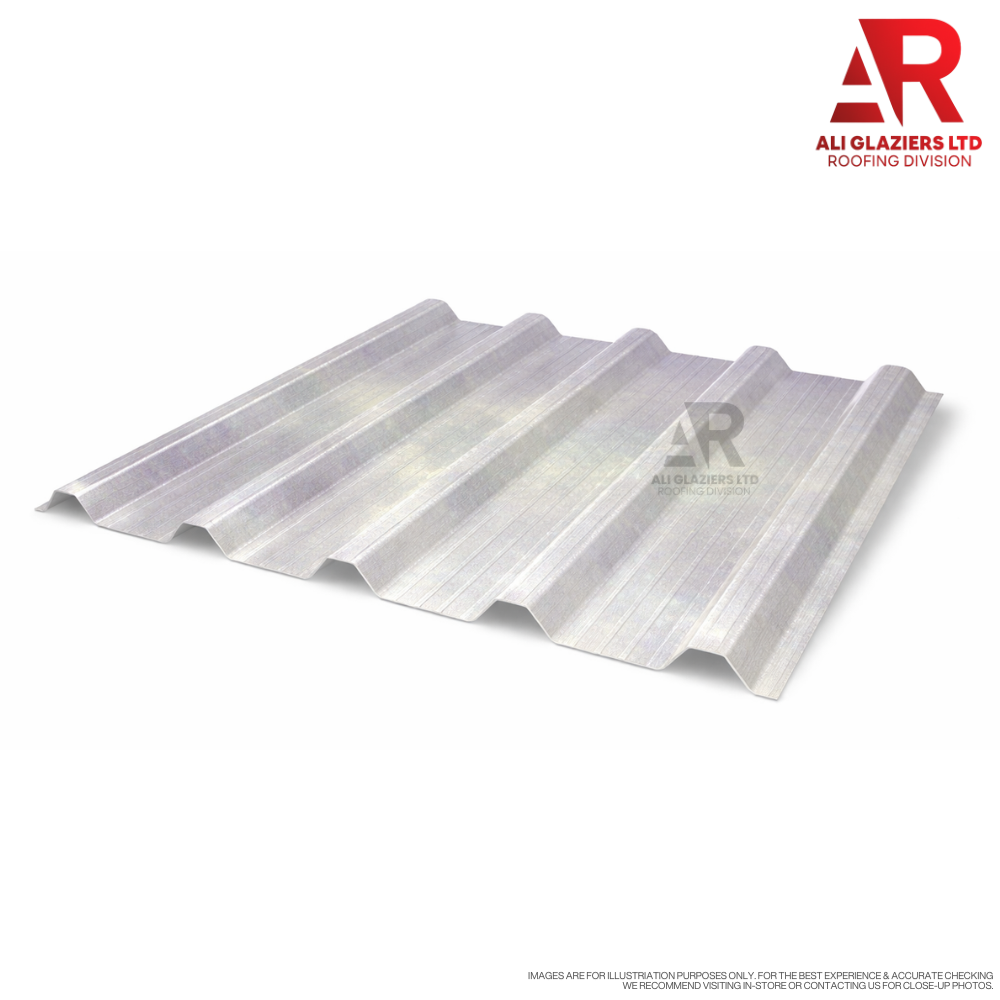
A roofing sheet can look acceptable while failing to match the specification quoted by the seller. This is why a proper inspection should focus on measurable product characteristics rather than colour or appearance alone.
For a large roofing project, checking the material before payment can prevent costly problems after delivery or installation.
What Are Counterfeit Mabati?
Counterfeit mabati are roofing products presented as, or made to imitate, another manufacturer's or brand's product without legitimate authorisation, while substandard roofing sheets may simply fail to meet the specification or quality requirements represented to the buyer.
These are related but not identical problems.
A product may be:
- Counterfeit
- Substandard
- Incorrectly specified
- Damaged
- Poorly manufactured
- Misrepresented by a seller
The correct response depends on what the inspection reveals.
What Are Substandard Iron Sheets?
Substandard iron sheets are roofing products that do not meet the required specification, quality level or applicable standard for the product being sold.
A sheet may be substandard if it has issues involving:
- Steel thickness
- Coating
- Dimensions
- Profile
- Manufacturing defects
- Finish
- Structural suitability
However, a buyer should not label a product "substandard" simply because it looks different from another sheet.
The product specification and applicable requirements should be the basis for assessment.
Why Fake Roofing Sheets Can Be Difficult to Spot
Fake roofing sheets can resemble genuine products because colour, profile and printed markings can sometimes be copied or imitated.
A quick visual inspection may therefore miss:
- Incorrect steel thickness
- Poor coating
- Incorrect sheet dimensions
- Unauthorised branding
- Missing documentation
- Manufacturing inconsistencies
This is why buyers should inspect more than the surface appearance.
Check the Supplier First
One of the most useful checks is confirming who is selling the roofing material before you inspect the sheets themselves.
Ask for:
- Registered business details
- Physical location
- Official quotation
- Invoice
- Product information
- Manufacturer details
- Warranty information
- Contact details
Be cautious if a seller refuses to provide basic documentation or insists on payment before giving clear product specifications.
Check the Manufacturer Name
The manufacturer's name should be consistent across the quotation, packaging, product documentation and other available identification for the roofing material.
Look for:
- Manufacturer name
- Product name
- Product code
- Batch information
- Printed markings
- Packaging labels
If the seller claims to be supplying a particular brand but the documentation identifies another manufacturer, ask for clarification before paying.
Verify the Product Specification
A genuine-looking roofing sheet can still be the wrong product, so compare the specification on the quotation with the specification of the material being supplied.
Check:
- Gauge
- Actual steel thickness
- Profile
- Sheet length
- Effective cover width
- Coating
- Finish
- Colour
- Warranty
Do not accept a verbal statement such as "this is the same quality" as a substitute for a written specification.
Check the Gauge
Gauge is an important specification to verify because a thinner sheet may not provide the same material specification as the product you ordered.
Remember the general relationship:
- Gauge 28 is thicker than gauge 30.
- Gauge 30 is thicker than gauge 32.
But gauge numbers should not be used alone.
Ask for the actual steel thickness in millimetres and compare it with the manufacturer's specification.
For larger purchases, sample measurements can provide additional confidence.
Measure the Sheet Thickness
Measuring sheet thickness can help identify a possible specification mismatch, although the measurement must account for manufacturing tolerances and the roofing coating.
Suitable tools can include:
- Micrometer
- Digital micrometer
- Vernier caliper
Take multiple measurements rather than relying on one reading.
Also remember that a basic thickness measurement can include the coating.
If the result is significantly different from the declared specification, request clarification or independent verification.
Check the Coating
The protective coating is important because it helps protect the underlying steel from corrosion, particularly in humid, industrial and coastal environments.
Ask what coating specification applies to the product.
Depending on the product, the specification may address:
- Metallic coating
- Coating mass
- Paint system
- Finish
- Corrosion resistance
- Warranty
A sheet that has the correct colour but an inadequate protective coating may still be unsuitable for the intended environment.
Inspect the Surface Finish
The surface of a roofing sheet should be inspected for obvious manufacturing defects, inconsistent finish, scratches, exposed steel and damage before payment.
Look for:
- Deep scratches
- Bare metal
- Flaking
- Blistering
- Uneven coating
- Severe dents
- Cracks
- Excessive surface defects
Minor handling marks may occur during transport, so distinguish between delivery damage and manufacturing defects.
Check the Profile
The roofing profile should match the product ordered because different profiles have different cover widths, appearance and installation requirements.
Common roofing profiles include:
- Corrugated
- Box profile
- IT5
- Tile profile
- Other manufacturer-specific profiles
Compare the delivered sheets with the quotation.
A different profile can change the amount of material required to cover the roof.
Measure the Sheet Length
Checking sheet length can reveal a mismatch between the dimensions ordered and the material delivered.
If you ordered sheets of a specified length, measure representative samples.
Also check:
- Overall width
- Effective cover width
- Profile depth
Effective cover width is particularly important because the sheet's overall width is not necessarily the same as the area it covers after side laps.
Check the Number of Sheets
Counting the delivered roofing sheets before installation can prevent shortages from being discovered after the project has already started.
Check:
- Number of bundles
- Number of sheets per bundle
- Individual sheet quantities where necessary
- Delivery note
- Invoice
For large projects, record the quantity received before signing final delivery confirmation.
Inspect the Packaging
Packaging and bundle labels can provide useful information about the product, although packaging alone should never be treated as proof that a product is genuine.
Check whether the packaging identifies:
- Manufacturer
- Product
- Gauge or thickness
- Profile
- Quantity
- Batch information
If packaging looks altered, damaged or inconsistent with the supplier's description, ask questions before accepting the delivery.
Look for Consistent Markings
Product markings should be checked for consistency rather than assumed to be genuine simply because a familiar brand name appears on the material.
Compare markings across:
- Bundles
- Labels
- Invoices
- Product documentation
- Manufacturer information
If the information is inconsistent, ask the supplier to explain the discrepancy.
Verify the Warranty
A roofing warranty should clearly identify the product and the conditions under which warranty protection applies.
Ask:
- Who provides the warranty?
- What product does it cover?
- What coating or material specification applies?
- How long does it last?
- What exclusions apply?
- How is a claim made?
A vague promise that "the sheets have a warranty" is not as useful as written warranty documentation.
Do Not Judge Quality by Colour Alone
Colour is not a reliable test of roofing sheet quality because two sheets can have similar colours while differing significantly in steel thickness, coating and manufacturing specification.
Avoid choosing a product simply because:
- The paint looks shiny
- The colour is attractive
- It resembles another brand
- It looks thicker
- It feels heavy
The technical specification is more important than appearance.
Do Not Assume Heavy Means Genuine
A heavier sheet is not automatically a genuine or higher-quality product because weight also depends on sheet dimensions, profile and coating.
If two sheets have different lengths or cover widths, their weights cannot be compared directly.
For quality verification, focus on the actual specification.
Ask for Product Documentation
Product documentation provides a stronger basis for verifying roofing material than verbal claims made during a sale.
Depending on the product, documentation may include:
- Product datasheet
- Specification sheet
- Warranty
- Manufacturer information
- Compliance documentation
- Invoice
- Delivery note
Keep copies of these documents with the project records.
Check Applicable Standards
Roofing materials sold in Kenya should be assessed against the applicable product and quality requirements rather than relying only on the seller's description.
For projects where compliance is important, ask the supplier what applicable standard or specification the product is manufactured to meet.
For institutional, commercial or regulated projects, the project consultant may also specify the required standard.
Where there is uncertainty, seek confirmation from the relevant standards or regulatory authority.
Beware of Unusually Low Prices
An unusually low roofing price should prompt additional questions because the difference may come from gauge, coating, dimensions, brand, warranty or product quality rather than a simple supplier discount.
Before accepting a bargain, compare:
- Gauge
- Thickness
- Coating
- Profile
- Length
- Cover width
- Warranty
- Manufacturer
A cheaper sheet is only genuinely cheaper if it meets the same specification.
Compare Like With Like
The most reliable way to compare roofing prices is to ensure every quotation describes the same product specification.
For example, compare:
| SpecificationSupplier ASupplier B | ||
| Gauge | Confirm | Confirm |
| Actual thickness | Confirm | Confirm |
| Profile | Confirm | Confirm |
| Sheet length | Confirm | Confirm |
| Effective cover | Confirm | Confirm |
| Coating | Confirm | Confirm |
| Manufacturer | Confirm | Confirm |
| Warranty | Confirm | Confirm |
| Delivery | Confirm | Confirm |
This prevents a low-priced quotation from appearing cheaper simply because it excludes important specifications.
Inspect Before Installation
Roofing sheets should ideally be inspected before they are cut, drilled or installed because identifying a product problem after installation can make replacement more difficult and expensive.
Before installation:
- Check the quantity.
- Check the profile.
- Check sheet dimensions.
- Inspect the coating.
- Confirm markings.
- Review documentation.
- Measure samples where appropriate.
If something appears inconsistent, stop and investigate before proceeding.
What If the Sheets Have Already Been Installed?
If you suspect that installed roofing sheets are substandard, document the concern before removing or modifying the material.
Take photographs of:
- Roof profile
- Product markings
- Exposed sheet edges
- Packaging
- Invoices
- Installation
- Visible defects
If necessary, arrange independent testing.
Do not destroy evidence before establishing what product was supplied.
Counterfeit vs Substandard: Know the Difference
Counterfeit and substandard roofing products should not automatically be treated as the same issue because counterfeit concerns relate to authenticity, while substandard concerns relate to whether the material meets its required specification.
For example:
Counterfeit concern:
The product is presented as a particular manufacturer's product but may not actually originate from that manufacturer.
Substandard concern:
The product may be genuine but does not meet the specification represented or required.
There can also be cases where both concerns exist.
What to Do If You Find a Problem
If your inspection identifies a potential specification or authenticity problem, keep the documentation and contact the seller before using the material.
A practical process is:
Step 1: Stop Installation
Do not install questionable material unnecessarily.
Step 2: Preserve Evidence
Keep labels, packaging and documents.
Step 3: Record Measurements
Document thickness and dimensions where appropriate.
Step 4: Contact the Supplier
Give the supplier an opportunity to explain the discrepancy.
Step 5: Seek Independent Verification
For significant projects or disputes, consider independent technical testing.
Step 6: Follow the Appropriate Complaint Process
Use the relevant consumer, standards or regulatory channels where necessary.
A Pre-Payment Inspection Checklist
Before paying for a roofing sheet order, use a written inspection checklist so important specifications are not overlooked.
Check:
- Manufacturer
- Product name
- Gauge
- Actual thickness
- Profile
- Sheet length
- Effective cover width
- Coating specification
- Colour
- Quantity
- Packaging
- Product markings
- Warranty
- Invoice
- Delivery documentation
For major projects, retain photographs and copies of all product documentation.
Why Choose Ali Glaziers Roofing Solutions?
Ali Glaziers Roofing Solutions supplies roofing sheets and accessories for residential, commercial, industrial and agricultural projects in Kenya.
Our team can help buyers compare roofing products according to:
- Gauge
- Steel thickness
- Profile
- Coating
- Sheet dimensions
- Application
- Budget
You can browse roofing products through the Roofing Shop.
Learn more about Ali Glaziers Roofing Solutions through Roofing About Us.
For product specifications and project pricing, use Request a Quote.
Final Thoughts
Counterfeit mabati in Kenya should not be identified by appearance alone. Before paying, buyers should verify the manufacturer, product documentation, gauge, actual thickness, coating, profile, dimensions, markings and warranty.
A few minutes of checking can help prevent a much more expensive problem after the roofing has been installed.
Remember to:
- Compare the written specification with the delivered product.
- Ask for actual thickness, not only gauge.
- Inspect coating and surface finish.
- Check sheet dimensions.
- Verify product markings and documentation.
- Keep your invoice and delivery records.
- Be cautious of unexplained price differences.
- Investigate suspicious material before installation.
The goal is not simply to find the cheapest roofing sheet. It is to make sure you receive the product specification you actually paid for.
Contact Us Today
Visit Us:
Funzi Road Branch, End of Funzi Road, Industrial Area
Ali Glaziers LTD Building
Nairobi, Kenya
Call / WhatsApp:
+254 (0) 716 259 682
+254 (0) 722 522 452
Email:
Shop Online:
Learn More:
Request a Quote:
Contact Ali Glaziers Roofing Solutions
Need help choosing roofing sheets or comparing specifications before you pay? Contact Ali Glaziers Roofing Solutions for product guidance and a quotation.